Shehu Sani Fires Back at El-Rufai, Accuses Former Governor of Hypocrisy in Criticism of Tinubu

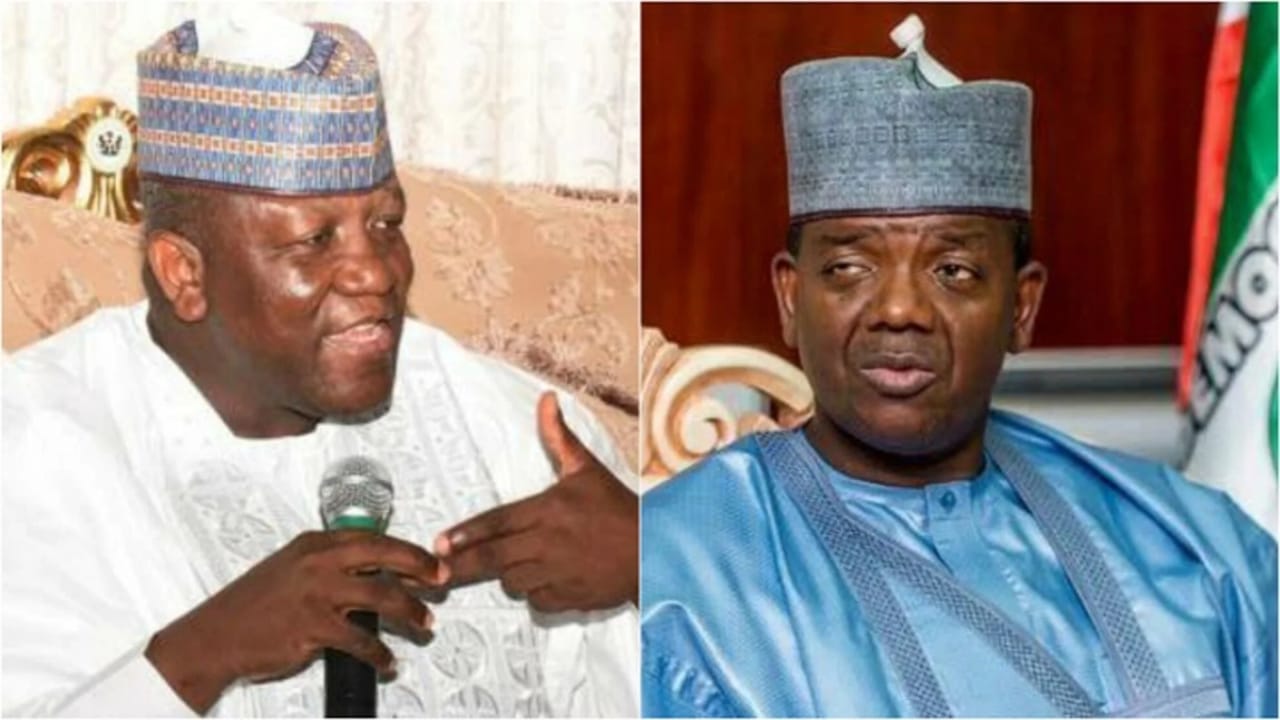
Former Senator representing Kaduna Central and human rights activist, Shehu Sani, has accused former Kaduna State Governor, Malam Nasir El-Rufai, of criticising President Bola Ahmed Tinubu out of frustration and unmet personal expectations rather than genuine concern for democracy or citizens’ welfare.

Sani made the remarks during an interview with journalists, where he argued that El-Rufai ignored democratic principles and human rights while in office but only began championing them after leaving power.

According to him, El-Rufai’s eight-year administration in Kaduna State was characterised by repression, insecurity and deep division, leaving behind what he described as a troubling legacy.

“El-Rufai forgot democracy and human rights when he was in power and remembered them only when he left office,” Sani said. “He planted tyranny and insecurity and is now preaching democracy and security.”

While acknowledging that President Tinubu is not without flaws, the former lawmaker maintained that the president’s record does not compare with what he described as “years of tyranny” under El-Rufai’s leadership in Kaduna State.

“Asiwaju is not a perfect leader—there is no perfect leader anywhere in the world—but he did not leave behind a legacy of divisiveness, persecution, repression, violation of human rights and wholesale evil, as witnessed by the people of Kaduna State,” Sani stated.

He further alleged that El-Rufai’s administration treated parts of Kaduna State as though they were detention centres, claiming that Northern Kaduna was treated like Kuje Prison while Southern Kaduna resembled Kiri Kiri Prison.

Sani also warned Nigerians against embracing El-Rufai as a political alternative, urging caution over what he described as a dangerous misjudgment.
“Nigerians searching for an alternative to an eagle should not make the mistake of embracing a vulture,” he warned.

In his concluding remarks, Sani said that when measured by service, history, character and morality, El-Rufai falls far below President Tinubu.

“In the barometer of record of service, history, character and morality, El-Rufai is an apprentice to Tinubu,” he said.

Sani’s remarks were in response to El-Rufai’s recent statements in which the former governor claimed that he never had a personal relationship with President Tinubu comparable to the one he had with former President Muhammadu Buhari, of blessed memory.

Southern Kaduna Activist Blasts El-Rufai Over Comments on Insecurity

A Southern Kaduna activist, Steven Kefas, has launched a blistering attack on former Governor of Kaduna State, Malam Nasir El-Rufai, over his recent comments on national security and citizens’ wellbeing.

El-Rufai, who governed Kaduna State between 2015 and 2023, had taken to his social media platform, X (formerly Twitter), to share a commentary titled “National Security, Justice, and the People’s Wellbeing: Reclaiming the Purpose of Power.” In the post, the former governor reflected on governance, justice, and the need for leaders to prioritise the safety and welfare of citizens.

However, Kefas, a vocal rights advocate from Southern Kaduna, responded sharply, accusing El-Rufai of lacking the moral authority to speak on security matters.

“You, amongst all people, do not have the moral standing to talk about security and the people’s wellbeing,” Kefas wrote on his X handle. “You are one of the architects of the insecurity facing our dear country today.”

Kefas’ reaction has since sparked widespread debate on social media, reopening long-standing controversies surrounding El-Rufai’s handling of security challenges during his eight-year tenure as governor.

Kaduna State ,particularly Southern Kaduna, witnessed repeated incidents of banditry, communal clashes, and deadly attacks on rural communities during El-Rufai’s administration. Human rights organisations and community leaders frequently criticised his government over its response to violence, alleged insensitivity to victims, and policies which critics claimed exacerbated ethnic and religious tensions.

While El-Rufai consistently defended his security strategies, maintaining that his administration worked closely with federal authorities and security agencies, critics argue that many communities remained vulnerable, with thousands displaced and numerous lives lost.

Kefas’ remarks reflect the views of several Southern Kaduna activists who have long accused the former governor of downplaying attacks in the region and failing to adequately protect minority communities.

The exchange comes amid renewed national conversations on insecurity, governance accountability, and the role of past leaders in shaping Nigeria’s current security challenges.

It would be recalled that in 2019, Kefas—who has been a persistent critic of El-Rufai—was arrested and detained in Kaduna, reportedly on alleged “orders from above,” an incident that further heightened tensions between the activist and the former governor’s administration.

Sokoto Probe: Transparency Group Defends Tambuwal, Accuses Current APC Government of Financial Recklessness

The Northern Transparency Advocate Group (NTAG) has strongly condemned the Justice Mu”azu Pindiga Committee of Inquiry set up by the Sokoto State Government under Governor Ahmed Aliyu to probe the financial activities of the immediate past administration of Senator Aminu Waziri Tambuwal.

The group described the panel’s allegations against Tambuwal’s government as “politically motivated, misleading and laughable”, insisting that the former governor’s administration remains one of the most financially disciplined in Nigeria.

Speaking at the end of a two-day seminar on “Corruption and Related Offences Against Economic Growth in Nigeria” held in Kaduna, the Zonal Coordinator of the group, Dr Murtala Abbas Tafoki, accused the current Sokoto State Government of using the committee as a tool for persecution and political intimidation.

“We find it very amusing, surprising and disappointing that Justice Pindiga, who himself has unresolved allegations of corruption, is now leading a panel to accuse one of the cleanest administrations in Nigeria of financial mismanagement.

“This is nothing but a politically sponsored witch-hunt aimed at destroying the records and achievements of the Tambuwal administration,” Tafoki said.

Tafoki described the committee’s report as “a laughing affair”, arguing that it lacks credibility in the face of what he called “widespread financial recklessness” under the current APC-led government in Sokoto.

“There is absolutely no justification, in whatever manner, for Justice Pindiga to point accusing fingers at an administration that was widely commended for prudence, transparency and accountability by reputable international organisations.

“The Tambuwal government was given a clean slate by both national and international institutions for excellent financial management, good service delivery and strict adherence to due process,” he stated.

According to the group, institutions such as the World Bank, United Nations financial monitoring agencies and CBN had previously rated Tambuwal’s government highly in terms of fiscal discipline and governance standards.

However, Tafoki alleged that the present administration of Governor Ahmed Aliyu has weakened financial controls and dismantled key due process mechanisms in the state.

“The Ahmed Aliyu administration has turned Sokoto into a spending empire without rules.

“Over N114 billion was allegedly withdrawn between July 2023 and November 2025 through five commercial banks without due process or adherence to financial guidelines.

“This level of financial recklessness is unprecedented and yet the government is busy chasing a past administration that was known for discipline and prudence,” he claimed.

The group also accused anti-corruption agencies of failing in their responsibilities.

“Even the EFCC economic monitoring teams, both at the state and federal levels, have failed woefully to stop the abuse of financial procedures in Sokoto State.

“It is ironic that a government accused of massive financial violations is now pretending to be a champion of accountability,” he alleged.

The group insisted that the allegations against Tambuwal are purely political.

“This so-called investigation is not about accountability; it is about revenge, intimidation and rewriting history for political gain.

“The aim is to destroy the legacy of a government that managed public resources responsibly and served the people with integrity,” Tafoki said.

NTAG called on the Economic and Financial Crimes Commission (EFCC) and the Independent Corrupt Practices Commission (ICPC) to redirect their attention to the current administration.

“We call on EFCC and ICPC to immediately investigate how the Ahmed Aliyu administration is spending the resources of the people of Sokoto State instead of allowing themselves to be used as tools of political propaganda,” Tafoki demanded.

The group also urged the agencies to revisit older corruption cases involving previous Sokoto administrations.

“For these agencies to prove their neutrality, they must reopen corruption allegations against the Bafarawa and Wamakko administrations as well,” he added.

On the judiciary, the group called for transparency regarding Justice Pindiga himself.

“While we commend the judiciary for resisting political intimidation, we demand the immediate release of all reports and findings on corruption allegations against Justice Pindiga,” Tafoki said.

“This is necessary to restore public confidence and prevent him from interfering in sensitive judicial matters where his integrity is already in question.”

The group, however, warned that politicising anti-corruption efforts could weaken democracy and undermine genuine accountability in Nigeria.

Northwest Nigeria Expands Access to Justice with New Mediation Systems


Katsina, Zamfara Embrace Out-of-Court Justice as New Mediation Laws Take Shape

In a significant boost to access to justice in Nigeria’s Northwest, Katsina State has fully operationalized its Alternative Dispute Resolution (ADR) law, while Zamfara State awaits gubernatorial assent for a similar framework. Both developments aim to provide faster, cheaper, and more community-sensitive resolutions to conflicts, especially in areas heavily impacted by insecurity.

The progress was highlighted during a capacity-building training organized by the peacebuilding organization International Alert Nigeria, which brought together justice officials from both states to strengthen their skills in mediation and conflict resolution.

Katsina’s Growing Mediation Network

Abdulrahman Lawal Buhari, Director of Citizens’ Rights and Head of the Mediation Centre in Katsina State, explained that Governor Mallam Umar Radda, Ph.D., has already signed the ADR law into effect, establishing a network of six mediation centres across the state.

“We have headquarters in Katsina, with branches in Daura, Malumfashi, Funtua, Dutsinma, and Kankia,” Buhari stated. “In many affected areas, people do not require the formal rigors of the court. They can resolve disputes amicably with the support of the mediation centres.”

He noted that International Alert has been a key partner, supporting the Ministry of Justice and facilitating knowledge exchange, including a successful access-to-justice forum in Sokoto in February 2024.

Zamfara’s Multi-Door Courthouse on the Horizon

In Zamfara, a bill to establish a Multi-Door Courthouse—a framework that channels disputes toward mediation, arbitration, and other ADR mechanisms—was passed by the State Assembly in November 2025 and now awaits the governor’s assent.

Sunday Momoh Jimoh, Program Manager for International Alert Nigeria, shared that the organization supported the Ministry of Justice in drafting the bill. “The ministry reached out to us, learning from our work in Zamfara and Katsina. That collaboration led to this training,” he said.

Training for Effective Implementation

The training, held in Gusau, aimed to equip future staff of Zamfara’s Multi-Door Courthouse and Katsina’s mediation centres with practical skills to implement the new frameworks.

“Although staff in Zamfara are yet to be formally appointed, we are training key stakeholders from the Ministry of Justice and the judiciary who will form the core of the structure,” Momoh Jimoh explained. “This ensures the right people have the capacity to hit the ground running.”

Backed by International Support

The initiative falls under the Strengthening Peace and Resilience in Nigeria (SPRING) program, funded by the United Kingdom Foreign, Commonwealth & Development Office and implemented by Tetra Tech International in consortium with the Centre for Democracy and Development and the Centre for Humanitarian Dialogue.

Mrs. Priscilla Ankut, Deputy Team Leader for SPRING, emphasized the program’s goal: to support conflict-sensitive policies and improve access to justice, particularly in regions where formal court systems are often overstretched or inaccessible.

A Step Toward Sustainable Peace

With rising insecurity and judicial delays in Northwest Nigeria, these ADR mechanisms offer a timely alternative. They empower communities to resolve disputes locally, reduce court backlogs, and foster reconciliation—a vital ingredient for long-term peacebuilding.

As Zamfara prepares to join Katsina in formalizing out-of-court dispute resolution, the partnership between state governments and international organizations highlights a growing shift toward sustainable, community-led justice in the region.

Poor Performance: Kaduna Elders Ask Senator Lawal Adamu to Account for Stewardship

… Accuses of him of Being only Visible on Social media

The Kaduna Central Elders Forum has asked Senator Lawal Adamu Usman, representing Kaduna Central Senatorial District, to render an account of his stewardship at the National Assembly, citing what it described as poor performance and weak engagement with constituents since his election.

The elders accused the senator of being more visible on social media than in the communities he represents, saying his approach to representation has failed to address the pressing challenges facing Kaduna Central.

In a statement jointly issued and signed by Mal. Inuwa Rigachikun and Mr Moses Bulus Madami, the forum described Senator Lawal Adamu as a lawmaker who relies largely on Facebook posts to communicate with constituents, rather than regular physical engagement, consultations and constituency outreach.

“Our Kaduna senator appears to exist only on Facebook. Representation goes beyond online posts. The people need to see, feel and interact with their elected representative,” the forum stated.

The group, made up of traditional rulers, retired civil servants and community stakeholders across the senatorial district, said the senator’s poor physical presence had widened the gap between him and grassroots communities, especially at a time when Kaduna Central is grappling with insecurity, unemployment and deteriorating infrastructure.

According to the elders, several communities within the district have not had any direct engagement with the senator since he assumed office, either through town hall meetings, constituency visits or stakeholder consultations.

They also accused the senator of failing to take strong positions on critical local issues, including repeated security challenges affecting rural communities, economic hardship, youth unemployment and the poor state of roads and public facilities.

“The people of Kaduna Central are facing serious challenges. These problems cannot be addressed from Abuja or through Facebook posts alone,” the elders said, adding that constituents expect their representative to be vocal both on the floor of the Senate and within the district.

The forum further called on the senator to publicly outline constituency projects attracted so far and explain his legislative contributions in clear terms to the people he represents.

The elders who underscores the senator’s performance as underwhelming, said physical presence was critical to effective representation. “Even if motions are sponsored, people want to see their senator. Physical engagement builds trust,” they said.

Islamic Body Backs INEC Chairman, Distances Itself from Sharia Council’s Stance

An Islamic group, the Young Muslim League of Nigeria (YMLN), has publicly disagreed with the position of the Sharia Council on recent electoral matters, declaring its support for the Chairman of the Independent National Electoral Commission (INEC), Prof. Joash Amupitan.

In a press statement issued by the National Coordinator of the group, Mal. Ibrahim Mohammed Abdullahi, the League’s position was based on its assessment of the INEC chair’s leadership, which it described as “professional, fair and committed to the democratic process.”

According to the group, while it holds the Sharia Council in high regard as a respected religious body, it believes that differences of opinion on national issues—especially governance and elections—should be expressed constructively and without undermining democratic institutions.

The statement reads: “The Young Muslim League of Nigeria wishes to clearly state that we differ with the recent stance taken by the Sharia Council concerning INEC,” the coordinator said. “Our support for Chairman Amupitan is anchored on his commitment to transparency, rule of law and the conduct of credible elections, which are essential for national stability.”

The group however, cautioned against what it described as attempts to politicise religion or discredit public officials without verifiable evidence, noting that such actions could deepen divisions in the country.

It further urged religious and civil society organisations to play complementary roles by promoting peace, voter education and national unity, rather than actions that could erode public confidence in electoral institutions.

“We believe that constructive engagement, not confrontation, is the best way to strengthen democracy,” the statement added.

The League also called on INEC to sustain reforms aimed at improving electoral integrity, while encouraging citizens—especially Muslim youths—to participate actively and responsibly in the democratic process.

The Sharia Council had earlier expressed concerns over electoral issues, prompting reactions from various groups across the country.

 APC Youth Coordinator Detained By State Government – Zamfara Residents 

By Jackson Debby

Residents of Gusau, Zamfara State capital, have accused the state government of complicity in the alleged abduction of Ambassador Bashir Isa Gusau, the Northwest Tinubu/Shettima Youth Coordinator for Zamfara State.

Gusau, a prominent supporter of President Bola Ahmed Tinubu’s administration, was reportedly taken from his residence by armed men, sparking controversy over whether he was kidnapped by bandits or detained by government operatives.

An eyewitness, who requested anonymity, claimed that “more than 30 armed bandits” stormed Gusau’s residence and abducted him in front of his wife, leaving the neighborhood in confusion.

However, residents have cast doubt on the bandit narrative, pointing instead to what they describe as a pattern of arrests targeting opposition party members in the state.

“We believe that our member Bashir Isa was abducted and detained by Zamfara government, not kidnapped by any group of bandits,” said Dr. Ado Usman Charanci, APC Support Group Northwest Coordinator, in a press statement.

According to the statement, efforts to locate Gusau through security agencies including the Police Headquarters in Gusau, the Department of State Security Service (DSS), and the Civil Defence proved unsuccessful.

“After some minutes of the ugly incident, we contacted the relevant security agents… only to discover that Isa Gusau is nowhere to be found,” a source disclosed.

Some reports allege that Gusau was taken by unknown security operatives attached to the Government House in Gusau and is being held in one of the guest houses within the premises.

The APC Support Group has called on security agencies to investigate the circumstances surrounding Gusau’s disappearance and warned the Zamfara state government, led by Governor Dauda Lawal of the Peoples Democratic Party (PDP), against what they termed “intimidation and persecution of innocent APC supporters.”

Gusau is known for his active role in mobilizing support for President Tinubu’s re-election campaign in the Northwest zone.

His family members have expressed confusion and frustration over their inability to determine the reason for his detention or secure his release.

The Zamfara state government has not issued an official statement on the allegations at the time of this report.

Kajuru Bandits’ Attack: Interdenominational Pastors Commend Uba Sani’s Rescue, Infrastructure Efforts

A delegation of leaders from the Nigerian Interdenominational Pastors Assembly (NIPA) has commended Kaduna State Governor, Senator Uba Sani, for his swift visit and rescue efforts to recent bandit attacks and mass abductions in Kajuru Local Government Area, as well as his administration’s renewed focus on infrastructure development and community support.

The delegation visited several affected communities in the Kurmin Wali axis of Kajuru amid heightened tension following coordinated attacks by armed bandits, during which scores of residents were abducted in separate incidents that attracted national and international concern.

Speaking during the visit, NIPA representatives, led by Reverend Abraham Habila Zock, praised Governor Uba Sani’s visible leadership and hands-on approach to crisis management. They noted that the governor’s decision to personally visit the affected communities to console families and reassure residents had restored hope and confidence among the people.

While addressing community members on needed to be security conscious , the group acknowledged the Governor’s decision to stand with the people in this darkest hour and for strengthening their communities through both spiritual and practical support.”

Stating further, Reverend Zock who observed that Governor Uba Sani’s administration has consistently reaffirmed its zero-tolerance stance on insecurity, pledged sustained collaboration with federal security agencies and the deployment of new strategies to protect vulnerable communities, particularly in Southern Kaduna.

” We can see that during an earlier visit to Kurmin Wali, the governor described the attacks as a “cruel abduction of innocent citizens” and assured residents that coordinated security efforts were ongoing to ensure the safe release of those still in captivity.”

Beyond security interventions, the visiting clergy highlighted the importance of infrastructure development in stabilising Kajuru and neighbouring communities. They pointed to ongoing road construction projects and improved access to social services under the Uba Sani administration as critical to restoring economic activities, enhancing mobility, and reducing the isolation that often worsens insecurity in rural areas.

Residents also welcomed recent infrastructure initiatives, including the rehabilitation of rural road networks and plans for new healthcare facilities, describing them as vital steps toward improving living conditions and strengthening community resilience.

Despite the grim backdrop of the abductions, community leaders said the pastors’ visit had boosted morale and reinforced collective resolve. “We are grateful that our religious leaders stood with us and recognised the government’s role in saving lives and rebuilding our communities,” a local community chairman said.

The clerics noted that the latest abductions underscore the persistent security challenges in Southern Kaduna, where years of banditry and kidnappings have disrupted farming, education, and daily life. However, they expressed optimism that the combined efforts of faith leaders, government authorities, and security agencies would continue to shape a more coordinated and resilient response to violence across the region.

DANGOTE: THE LEGENDARY ICON OF ALL TIME (1)

By Ibrahim Abdullahi

Aliko Dangote is the founder of the Dangote Refinery, situated in Lagos. He built the refinery through hard work and perseverance, a process that took about four years.

Today, Dangote Refinery is the largest in Africa and the world’s biggest single‑train refinery. An expansion is already underway; and on completion it will produce over one million barrels of petroleum product per day, making it the largest refinery globally.

Dangote started as a humble businessman, rising from the bottom to the top. He has never held a government appointment, so no one can accuse him of embezzling public funds. Before entering oil and gas, he invested in cement, rice, sugar, spaghetti and other sectors. He is the largest individual employer in Nigeria and across Africa, and after the expansion his company will surpass the Federal Government in employment numbers.

After investing $20 billion, some “enemies of the nation” — self‑styled cabals — have tried to sabotage the refinery. Their goal is to keep importing fuel, which drains foreign exchange, weakens the naira and enables fraudulent claims on government subsidies. A functional refinery is the best way to stop this economic sabotage.

Dangote once offered to buy NNPC’s refineries, but public outcry and former President Yar’Adua’s rejection halted the deal. He then built his own, far larger than any state‑owned plant. When the Nigerian Midstream and Downstream Petroleum Regulatory Authority, led by Ahmed Farouk, refused to supply crude, Dangote was forced to import from the United States. He exposed the problem through the media, prompting public pressure.

Farouk’s office later accused Dangote’s fuel of being substandard and high in sulfur. Dangote countered with evidence from his world‑class laboratory, inviting the National Assembly to inspect it. The legislators were satisfied, while the regulator failed to produce its own test results, revealing it had no functional laboratory.

The cabal then tried to block product loading by withdrawing union trucks. Dangote responded by purchasing 4,000 trucks to distribute his products nationwide, eliminating reliance on the union fleet. The union, backed by the cabal, demanded his drivers join them, but Dangote refused, citing voluntary union membership. A fire incident damaged part of the refinery, but it was repaired at cost.

PENGASSAN later joined the fight, striking against the refinery. Nigerians opposed the strike, and the President intervened, ending it. The President also ordered the regulator to sell crude to Dangote in naira, removing the need for foreign exchange. Since then, the naira has stabilized, and Nigeria now exports refined products, earning foreign exchange and boosting GDP.

Recently, Dangote accused Farouk of corruption, alleging he paid $5 million (≈N7 billion) for his children’s school fees. The claim shocked the nation, and many call for Farouk’s prosecution to recover alleged looted funds. The President has already removed Farouk from office, but further legal action is urged.
With the ongoing development, Dangote submitted petition to ICPC, which he later withdrew but sent a fresh one to the EFCC and the agency is now carrying out a thorough investigation.

Some cabal members who took delight in spreading false allegations that Dangote’s wealth is fraudulent had to take back their vomit. A retired NNPC staff from Kaduna State immediately retracted his statement after receiving a lawyer’s letter. He had since buried his head shame in shame by “retracting and apologizing” to Dangote.

While Nigerians continue to thank Dangote for locating the refinery in Nigeria rather than abroad, viewing it as a national pride and a solution to years of moribund state refineries, I personally suggest that to protect this asset, the President should advisably declare the Dangote Refinery “a national asset and monument,” deterring future sabotage. The refinery has already prevented fuel prices from reaching N5,000 per litre and has created thousands of jobs.

My advice to Dangote is simple: build modern depots in each of Nigeria’s six geopolitical zones to ease Lagos congestion, reduce highway accidents and lower truck wear‑and‑tear.
If the depots are built in each geo political centres the trucks will load at their zones and they do not need to come all the way to Lagos to load their products. If this advice is taken by Alh Aliko Dangote it will reduce accident on the high ways, reduce congestion in Lagos, and it will also reduce the wear and tear of his trailer vehicles.
This is my own humble technical advice to the legendary Icon of all time Alh Aliko Dangote.

In summary, Dangote’s refinery is really a transformational, privately‑driven achievement reshaping Nigeria’s energy landscape, creating jobs, and challenging entrenched import interests. With continued support, it will secure Nigeria’s future and remain a source of national pride. We wish you more grease to your elbows, ride on my big brother you are doing great and shame to the cabals.

Ibrahim Abdullahi is the Managing Director, Jessibram Investment Ltd, Abuja.

From Turbulence to Traction: Why Governor AKY’s APC Shift Could Reset Kano’s Politics

For decades, Kano politics has been a theatre of perpetual motion—loud, crowded and endlessly combative. Elections came and went, governments changed, yet the underlying rhythm remained the same: tension over stability, politics over policy and survival over strategy.

Governor Abba Kabir Yusuf’s (AKY) alignment with the All Progressives Congress (APC) may well mark the first decisive break from that cycle. This is not merely a political realignment; it is an appointment with history.

Kano’s greatest paradox has always been its strength. As Nigeria’s commercial nerve centre of the North, blessed with population, enterprise, culture and talent, the state should have been miles ahead. Instead, political fragmentation has repeatedly turned energy into friction.

Governments spent too much time fighting for legitimacy and too little time governing for growth. AKY’s move into the APC, aligning Kano with the party at the centre, directly confronts this structural weakness. Stability, in politics, is not the absence of opposition; it is the presence of predictable cooperation. By collapsing the wall between Kano Government House and the federal power structure, AKY has altered the incentives of politics itself. Conflict now comes at a higher cost, while collaboration suddenly pays dividends. This alone recalibrates the political atmosphere—from constant brinkmanship to cautious consensus.
More importantly, the alignment repositions Kano within Nigeria’s national development conversation. Infrastructure, security coordination, industrial policy, power projects, rail connectivity and urban renewal are no longer distant lobbying points; they become shared responsibilities. A governor operating within the same political framework as the presidency gains not just access, but influence. For a state as large and complex as Kano, that influence is oxygen.

Critics may frame the move as opportunism.
History, however, judges outcomes—not slogans. Kano’s politics has tried purity and paid the price in paralysis. What AKY appears to be betting on instead is effectiveness.
The APC platform offers a wider governing coalition, deeper institutional reach and a pathway to long-term policy continuity beyond electoral cycles. In a state fatigued by political drama, continuity itself becomes a reform.

There is also a quieter, but more profound implication. AKY’s alignment sends a signal to Kano’s political class that the era of perpetual antagonism may be ending. When the governor chooses convergence over confrontation, the tone of politics changes from the top down. Investors notice. Civil servants recalibrate. Politics stops being war by other means and starts resembling governance.

History is unkind to leaders who merely occupy office. It is far kinder to those who recognise defining moments and act decisively. AKY’s alignment with the APC is such a moment—a calculated risk, yes, but also a strategic correction long overdue. If managed with discipline, inclusiveness and a relentless focus on delivery, this decision could stabilise Kano politics for a generation and unlock progress that has been promised for decades but postponed by discord.

Kano has waited long enough. History has finally knocked—and this time, the door appears to be opening.

Barrister Aminu Hussaini – is the Special Adviser to the Governor of Kano State on Justice/Constitutional Matters- 234 8033 742424, aminuhussaini173@gmail.com