By David Usman
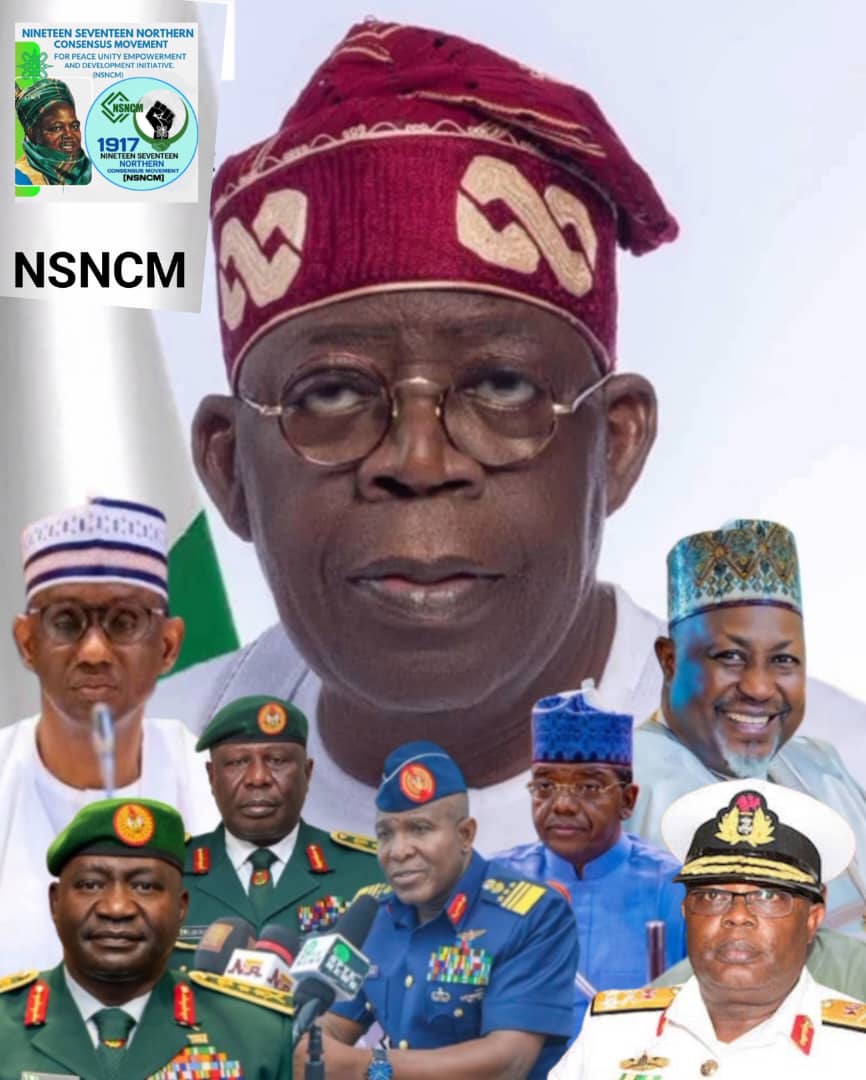
Kaduna, Nigeria – The Nineteen Seventeen Northern Consensus Movement (NSNCM) for Peace, Unity, Empowerment and Development Initiative, an umbrella body of 598 registered associations across the North and among Northerners resident in the South, has thrown its weight behind Nigeria’s current defence and security leadership, urging Nigerians to rally in support of their efforts.
In a statement signed by its National President, Awwal Abdullahi Aliyu Sarkin Yakin Kanya Babba, the movement described the appointments of Minister of Defence, Mohammed Badaru Abubakar, Minister of State for Defence, Bello Matawalle, National Security Adviser, Malam Nuhu Ribadu, and the current service chiefs – General Christopher Musa (Chief of Defence Staff), Lieutenant General Olufemi Oluyede (Chief of Army Staff), Air Marshal Hassan Bala Abubakar (Chief of Air Staff), and Vice Admiral Emmanuel Ogalla (Chief of Naval Staff) – as “the best thing that has happened to the Nigerian Defence sector in recent times.”
The group said it was compelled to speak out “not out of prejudice but in the spirit of cohesion and caution” to strengthen public trust in the country’s security institutions.
According to the NSNCM, the defence and security chiefs have in the past two years adopted fresh strategies, “thinking out of the box” and employing global best practices that have led to major gains in the fight against insecurity.
The movement highlighted key achievements including: Improved synergy among security agencies and paramilitary outfits; Capacity building and better welfare for personnel, Stronger collaboration with neighbouring nations, Enhanced maritime security and curbing of piracy, Safer passageways for goods and people across the country, Upgraded arsenal and training for troops, Expanded special operations forces, and Boosted civil-military relations through whistleblower protection and intelligence sharing.
The group also commended the re-engagement of strategic defence institutions such as the Defence Industries Corporation of Nigeria (DICON), Nigerian Defence Academy (NDA), National Defence College, Armed Forces Command and Staff College (Jaji), and the Defence Space Administration, among others.
The NSNCM urged Nigerians to provide constructive criticism, intelligence sharing, and cooperation with security agencies rather than calling for the removal of service chiefs.
“Security is a collective responsibility. We must all work together to ensure our communities are safe,” the statement read. “If you see something, say something. What we need is cohesion, caution, and positive engagement, not destructive rhetoric.”
The group expressed concern over calls for the removal of current security heads, demanding investigations into the activities of individuals or groups behind such campaigns.
“Spectators and commentators on national security must contribute ideas that build, not destroy. We have an accommodating and listening leadership team in place, and it is only right that Nigerians rally behind them,” NSNCM said.
Reaffirming its faith in Nigeria’s future, the movement concluded: “We have a great nation to build and protect, to the admiration of other nations. Long live the Federal Republic of Nigeria.”
Author Archives: News All Around
Writer,Blogger,Historian, Journalist
Groundbreakings Without Progress: Uba Sani’s Kaduna and the Politics of Optics
By Apa Aladi
Symbolism Over Substance
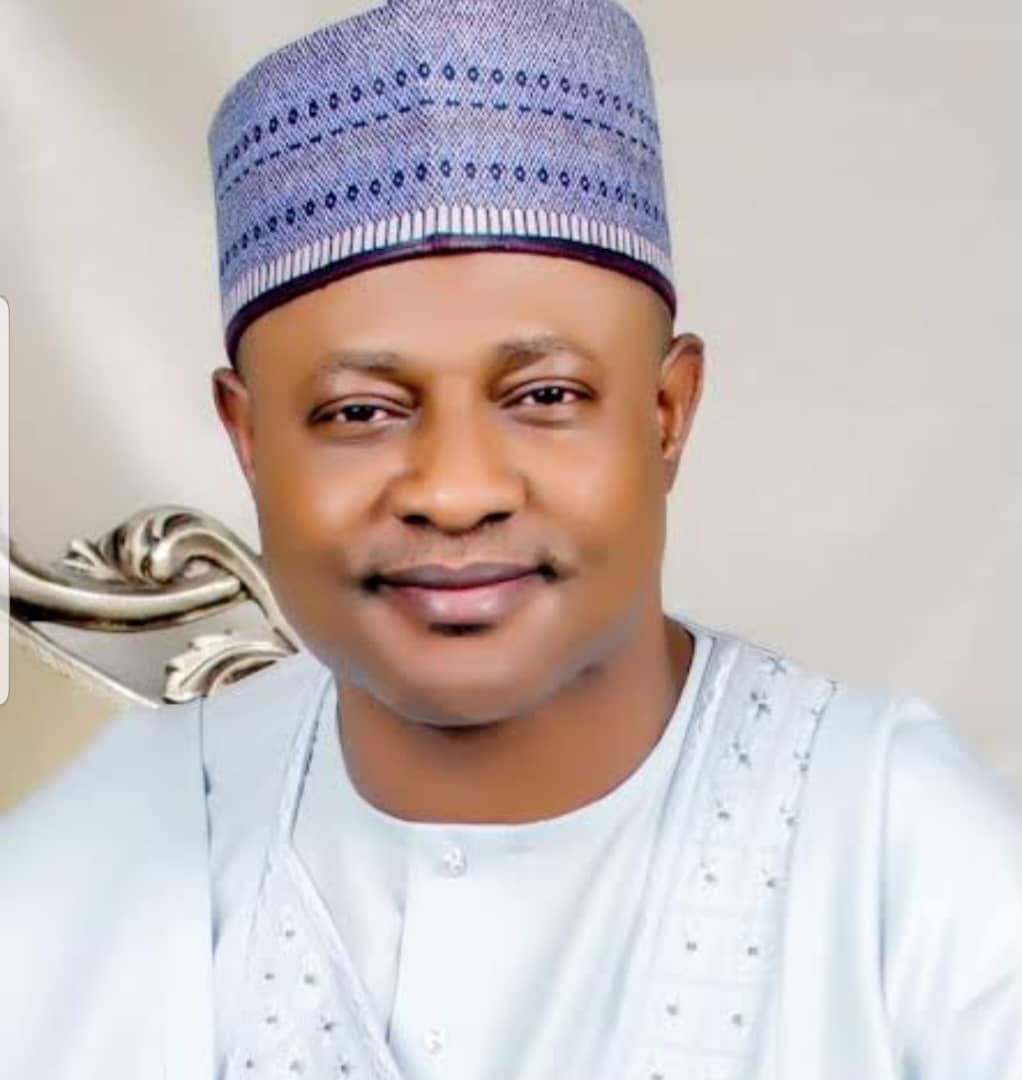
Nearly two years into Governor Uba Sani’s administration, Kaduna residents are seeing more ribbon-cuttings than real results. Despite unprecedented revenues, progress on critical infrastructure remains stalled, exposing a government more invested in optics than outcomes.
The Politics Behind the Ceremonies
This strategy became even more visible after recent political developments, including former Governor Nasir El-Rufai’s visit and the activities of the ADC, which appeared to unsettle the governor. In response, the administration embarked on a fresh wave of groundbreakings. However, rather than convincing Kaduna residents, these ceremonies are increasingly seen as attempts to shape perceptions in Abuja and beyond, while the reality at home tells a different story.
Kafanchan as a Case Study
Take the Kafanchan metropolis as an example. El-Rufai initiated around 12 major road projects toward the end of his administration, completing two in a short time and leaving ten at various levels of progress. When Uba Sani took office, work was still ongoing before it was abruptly halted due to a fabricated allegation and a failed attempt to pin fault on his predecessor.
Nearly two years later, Governor Sani has completed just one project—and that one was already near completion under El-Rufai. This track record translates to one success out of ten, a failure by any reasonable measure. The same pattern is evident in Zaria, Rigasa, and Zango, where several projects remain uncompleted despite repeated announcements.
Quality Concerns
The few projects handled under the current administration raise serious questions about contractor competence, durability of construction, and even basic elements such as streetlights and drainage. Poor execution risks leaving the state with infrastructure that not only falls short of expectations but also requires premature repairs.
The Funding Paradox
The paradox is that these failures cannot be explained by a lack of resources. On the contrary, Governor Uba Sani’s government has benefited from unprecedented revenues. Monthly FAAC allocations have more than doubled compared to El-Rufai’s era, rising from an average of ₦4 billion to between ₦8 and ₦10 billion.
Beyond this, the state has accessed multiple grants and loans, in addition to the alleged ₦150 billion loan mentioned by El-Rufai himself. The Kaduna Internal Revenue Service also claims to be generating more than it did under the previous administration. With this financial profile, excuses about debt servicing ring hollow.
The Central Question
The central question remains: where is the money going?
Despite these favorable financial conditions, Uba Sani’s results fall far short of El-Rufai’s. Where his predecessor left behind tangible infrastructure—from roads and hospitals to urban renewal projects—the current administration has delivered little beyond ceremonies, promises, and propaganda.
Kaduna’s Reality
For Kaduna citizens, groundbreaking events do not build roads, equip hospitals, or generate jobs. They are, at best, optics. At worst, they are distractions. Unless Governor Sani shifts from symbolic politics to practical governance, history may judge his tenure as one defined not by transformation, but by theatrics.
El-Rufai Under Fire: Rights Group Demands Ex-Governor Obey Police Summons
Mikayla Ludawa
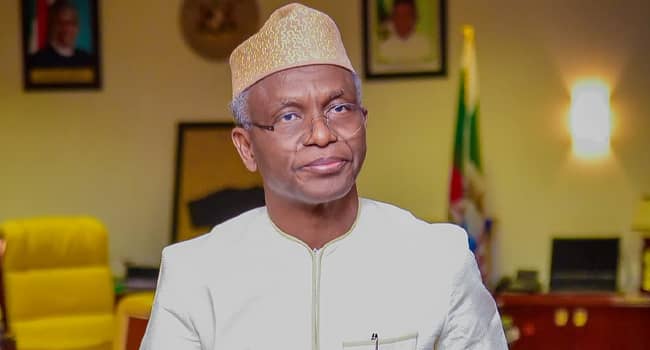
The Human Rights Alliance of Nigeria (HRAN) has issued a scathing rebuke of former Kaduna State Governor, Mallam Nasir El-Rufai, demanding that he immediately honour the invitation extended to him by the Kaduna State Police Command in the interest of upholding the rule of law.
The Command had reportedly summoned El-Rufai alongside six top members of the African Democratic Congress (ADC) over alleged conspiracy, incitement, mischief, and disturbance of public peace in the state.
The rights group, however, expressed outrage that instead of submitting himself to the authorities, El-Rufai chose to lodge a petition against the state’s Commissioner of Police, Muhammad Rabiu, accusing him of “unprofessional conduct, abuse of office, and serial violations.”
In a strongly worded statement signed by its spokesperson, Abraham Tar, HRAN described El-Rufai’s actions as arrogant and contemptuous of constituted authority, insisting that such conduct was unbecoming of a former governor and a man who once wielded significant public trust.
“We are saddened that instead of honouring the invitation, he decided to petition the Police Service Commission, an act that undermines the principles of accountability and respect for the law,” the group said.
The group recalled that several former governors in Nigeria, including Yahaya Bello of Kogi State, Attahiru Bafarawa of Sokoto State, and Ayodele Fayose of Ekiti State, had previously honoured police invitations without hesitation.
“Since others before him have submitted themselves to investigation when invited, there is no reason why El-Rufai should act differently,” HRAN added.
The rights group further warned that political leaders who trample on the authority of the police send dangerous signals to ordinary citizens, thereby weakening Nigeria’s democratic institutions. It urged leaders across the country to set positive examples by demonstrating humility and respect for due process.
According to HRAN, El-Rufai’s refusal to comply is not just a personal affront to the police command but also a brazen assault on the rule of law in Nigeria.
Prof. Godwin Akper Missing from NOUN Congregation List

A widely a tauted candidate’s name for the position of Vice-Chancellor at the National Open University of Nigeria (NOUN) was missing on the list of members of the university’s congregation.
Prof. Godwin Akper who was the immediate past Deputy Vice-Chancellor incharge of Technology Innovation and Research of the university was conspicuously missing amongst the names of other members of the congregation this Monday.
The NOUN congregation was constituted Monday to elect from amongst them who to represent their interest in the search team, a key committee in the process leading to the emergence of a new Vice-Chancellor.
The tenure of the current VC expires on February 11th, 2026.
Our reporter gathered that the exclusion of Prof. Akper’s name from the list of the university’s congregation may not be unconnected to his not meeting the requirement of having a first degree, which qualifies one for membership of the university congregation.
Findings by our reporter reveals that Prof. Akper holds a Diploma in Theology, Reformed Theological College of Nigeria, Mkar Benue State (now Theological Seminary Mkar) before proceeding for a Master of Arts at Westminster Theological Seminary, California, USA.
A member of the congregation who pleaded anonymity with our reporter said “with this development, the chances of Prof. Akper in succeeding the incumbent VC is becoming slim by the minutes. This is because the VC is not only the Chairman of the university congregation, but also is responsible for bestowing first degrees to graduands during convocation. How then will someone without a first degree bestow what he doesn’t have” he concluded.
Southern Kaduna groups tackle El-Rufai: ‘You thrived on division and vendetta’
By Israel Bulus, Kaduna
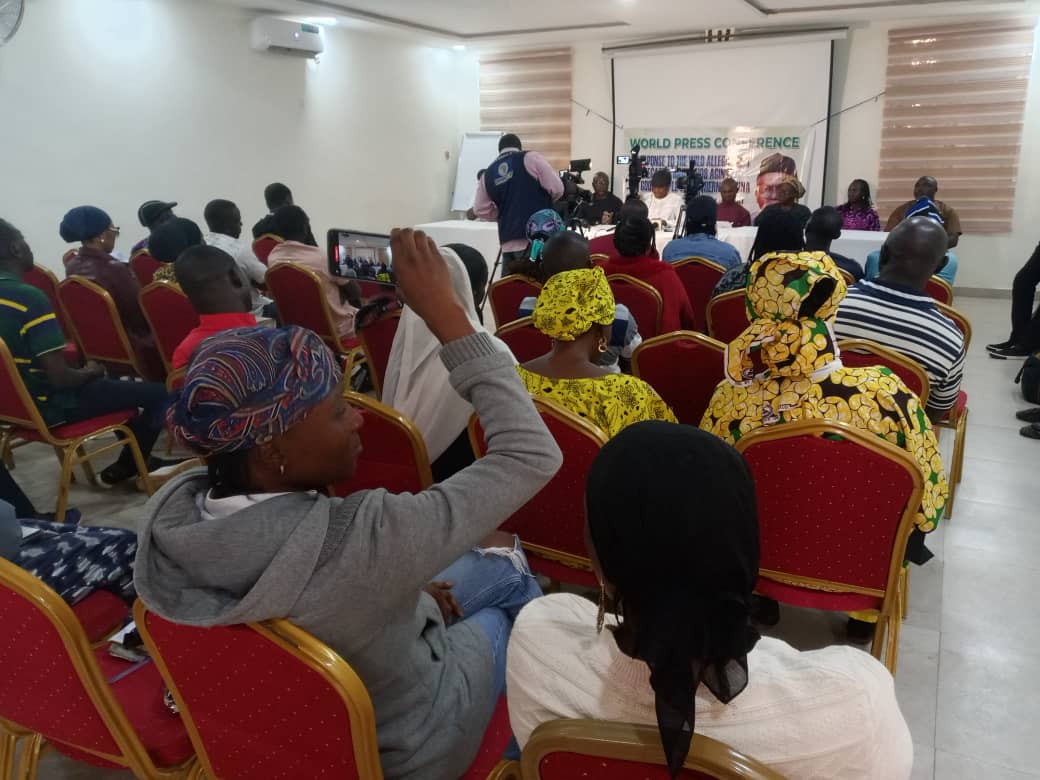
Southern Kaduna and Middle Belt groups on Tuesday descended on former Kaduna State governor, Nasir El-Rufai, accusing him of using “reckless hate speech” against the people of Southern Kaduna and thriving on vendetta politics during his eight-year rule.
The Southern Kaduna Awake Group and the Middle Belt Forum, Kaduna chapter, were reacting to El-Rufai’s appearance on Channels Television’s One-on-One with Seun, where he described Southern Kaduna people as violent, entitled, and less than 25 per cent of the state’s population.
Addressing a press conference in Kaduna, the National Youth Leader for the Middle Belt Youth Forum, Comrade Nasiru Jagaba, alleged that El-Rufai’s bitterness stemmed from the rejection of his ministerial nomination by the Senate last year, following petitions from Southern Kaduna.
“His years in office will be remembered for mass sackings of civil servants, expansion of grazing reserves at the expense of indigenous landowners, and failure to protect communities from relentless attacks,” Jagaba stated.
They also faulted El-Rufai’s comparison of Southern Kaduna to the Shiite Islamic Movement led by Sheikh Ibrahim El-Zakzaky, saying it was a “reckless attempt to criminalise an entire population.”
The groups maintained that contrary to El-Rufai’s claims, President Bola Tinubu’s administration had sited major projects in Southern Kaduna, including the University of Applied Sciences and a Federal Medical Centre.
Echoing the same view, publisher of Gurara Accord, Bomba Dauda, said El-Rufai had lost political relevance and was “using Southern Kaduna as a scapegoat to remain in the spotlight.”
“His administration thrived on division and undemocratic practices. He suppresses one side to gain relevance in another using religion, but that tactic no longer resonates with today’s reality,” Dauda said.
He urged Nigerians to hold El-Rufai accountable for “dangerous narratives capable of pitching communities against one another.”
THE STEWARDSHIP OF PROF. MAHMOOD YAKUBU: A REJOINDER TO DR LADAN SALIHU
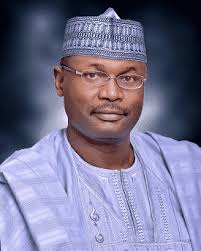
Dr. Ladan Salihu’s recent remarks on the performance of the Independent National Electoral Commission (INEC) under the leadership of Professor Mahmood Yakubu are marked by a tone of sweeping disapproval and generalization that does little justice to the complexities and hard-earned gains of Nigeria’s evolving democratic process. While criticism is an essential feature of democratic discourse, it must be grounded in a balanced appraisal of facts and realities, not driven by pessimism or selective memory.
Dr. Salihu’s claim that “INEC has not lived up to the expectations of Nigerians” and that “nothing has changed” since previous elections fails to acknowledge the significant, data-backed, and courageous reforms that have transformed the electoral landscape under Professor Yakubu’s stewardship. While elections in Nigeria remain a work in progress—as they are in every democracy—the assertion that INEC has “missed out on history” is not only inaccurate but dismissive of the monumental steps taken to safeguard electoral integrity.
A Groundbreaking Technological Shift
One of the most revolutionary achievements under Professor Yakubu has been the deployment of the Bimodal Voter Accreditation System (BVAS) and the INEC Result Viewing Portal (IReV). These innovations mark a decisive break from Nigeria’s history of ballot stuffing, multiple voting, and result manipulation.
BVAS eliminated the long-standing issue of ghost and multiple voting by introducing biometric accreditation, ensuring that only eligible and present voters could cast their votes.
IReV, for the first time in Nigeria’s electoral history, enabled near real-time public access to polling unit results, introducing a level of transparency previously unimaginable.
While these technologies experienced challenges—particularly during the 2023 presidential election—such hiccups are not evidence of failure but rather indicators of the ambition and scale of these reforms. The logical path forward is to strengthen and refine these systems, not to discard them.
Institutional Independence and Courage
Under Professor Yakubu, INEC has demonstrated an unusual level of operational independence and courage in the face of overwhelming pressures from political actors, entrenched interests, and threats of violence. The Commission has postponed or suspended elections where the process was compromised, and pursued legal action against electoral offenders—often in a judicial system that itself remains slow and cumbersome.
This insistence on upholding due process, often at great personal and institutional cost, should be seen as a positive departure from the opaque and manipulated electoral systems of the past.
Logistical Feats in a Complex Landscape
Nigeria is one of the most complex electoral environments in the world, with over 93 million registered voters and more than 176,000 polling units across difficult terrains, remote areas, and volatile regions. Organizing credible elections on this scale requires a herculean logistical effort.
Under Professor Yakubu’s leadership, INEC has:
Improved early distribution of sensitive materials.
Enhanced the training and deployment of over a million ad-hoc staff, including NYSC members.
Reduced delays and disorder in many parts of the country during election days.
To overlook these significant operational successes while highlighting isolated incidents of failure is a distortion that does injustice to the thousands of Nigerians who worked tirelessly to deliver credible elections.
Addressing the Trust Deficit
The oft-cited “trust deficit” is not unique to INEC under Professor Yakubu—it is a historical issue stemming from decades of electoral malpractice. However, trust is not rebuilt overnight; it requires time, transparency, consistency, and institutional reform. The introduction of BVAS and IReV are not just cosmetic changes—they are foundational tools in the long road toward restoring public confidence in elections.
Conclusion: Progress, Not Perfection
Democracy is not a destination but a journey. No electoral process anywhere in the world is perfect, but progress must be recognized and built upon. Professor Mahmood Yakubu’s tenure has not been flawless, but to claim “nothing has changed” is to ignore the transformative steps taken under his watch.
Instead of hasty condemnation, what Nigeria’s electoral process needs now is critical support, constructive engagement, and continued innovation. Professor Yakubu has laid a foundation upon which a more transparent, credible, and inclusive democracy can be built. The responsibility now lies with all stakeholders—government, civil society, the judiciary, political actors, and the electorate—to protect, improve, and institutionalize these gains.
Dismissing his efforts wholesale only serves to discourage reformers and embolden those who prefer the shadows of the past. Let us not squander the progress we have made, but rather, consolidate and expand it for the sake of future generations.
Abubakar Billy Tafawa Balewa
Bauchi, Nigeria.
NAN Slams ADC Over ‘Baseless’ Allegations on Voter Registration Figures
Michelle Adonma
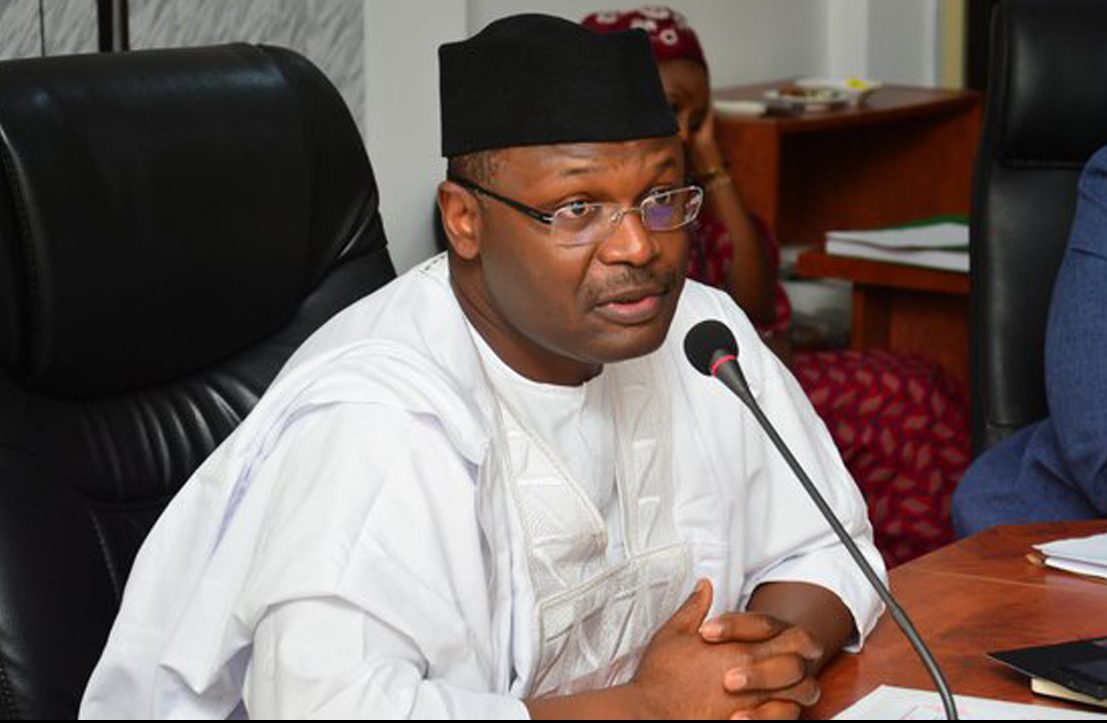
The Northern Awareness Network (NAN) has strongly criticized the African Democratic Congress (ADC) over its recent comments questioning the credibility of voter registration figures released by the Independent National Electoral Commission (INEC). NAN described the ADC’s statements as unfounded, misleading, and indicative of a party grappling with political irrelevance.
In a statement signed by its Chairman, Salihu Sulaiman, NAN expressed concern over what it called the ADC’s “public disputes” regarding registration statistics in Osun State and the South West region. According to NAN, the figures reported by INEC are consistent with ongoing nationwide efforts to expand voter participation and reflect the electoral engagement of the citizens, not any form of manipulation.
“It is both irresponsible and dishonest for any political party to interpret voter registration numbers through the lens of their own electoral ambitions,” the statement read. NAN cited the 2022 Osun Governorship election, in which the People’s Democratic Party (PDP) defeated the All Progressives Congress (APC), as proof that high registration figures do not necessarily favor any one party. NAN said it was perplexing that the PDP, now aligned with the ADC in their criticism, would dispute data from a state they had recently won.
The group further accused the ADC of selective outrage, pointing out the party’s silence on figures from the Federal Capital Territory (FCT). NAN argued that such cherry-picking calls into question the sincerity of the ADC’s concerns and suggests that their allegations may be politically motivated rather than rooted in a genuine interest in electoral transparency.
“Why the focus on Osun and the South West while ignoring voter numbers from other parts of the country, including the FCT? The ADC’s silence on other data suggests they are more interested in discrediting the process than in strengthening democracy,” NAN stated. The group said the ADC’s posture amounted to an intentional undermining of INEC and its critical mandate.
Rather than stirring controversy, NAN urged the ADC to take up the responsibility of educating and mobilizing Nigerians to register and participate in elections. It emphasized that all political parties share in the burden of building a robust democratic process, and that distracting the public with unsubstantiated claims was counterproductive and dangerous.
According to NAN, parties should work with INEC and other democratic institutions to encourage voter participation. “Political energy should be directed towards positive engagement, not divisive rhetoric. The focus should be on inclusion and participation, not paranoia,” the group said, adding that constant political quarrels only serve to discourage potential voters.
The organization went further to accuse the ADC of trying to set the stage for rejecting future election results. NAN stated that baseless allegations are often the hallmark of struggling political outfits preparing excuses for poor electoral performance. “This is a textbook case of a party preparing to blame everyone but itself for a defeat it already anticipates,” NAN noted.
Salihu Sulaiman called on Nigerians to remain vigilant and not be swayed by what he described as the antics of political actors who invent conspiracies to mask their own failings. He emphasized that sustaining democracy requires political maturity and a commitment to facts, not propaganda and manufactured outrage.
In conclusion, NAN reiterated its support for INEC and all efforts aimed at expanding voter registration across the country. The group urged Nigerians to register, participate, and reject divisive politics. “We must all protect the sanctity of our democracy from those who would tear it down just to make a headline,” the statement concluded.
Yoruba Youth Council Warns PDP, ADC Against Casting Doubt on INEC Voter Registration Figures
By Aisha Balogun
The Yoruba Youth Council (YYC), an umbrella organisation of Yoruba youths nationwide, has cautioned political actors against raising unnecessary alarm over the Independent National Electoral Commission’s (INEC) pre-registration figures in Osun State.
In a statement at the weekend by its spokesman, Saheed Adeola, quoting YYC National President, Comrade Eric, the group described the claims by the Peoples Democratic Party (PDP) and the African Democratic Congress (ADC) as an attempt to discredit INEC ahead of elections.
According to INEC’s latest data, Osun State recorded 393,269 pre-registrations, the highest in the country. However, the PDP and ADC dismissed the figure as unrealistic and alleged manipulation.
Reacting, INEC, in a statement on Thursday by the chairman’s spokesman, Rotimi Oyekanmi, debunked the allegations and explained that the numbers were consistent with its 2021 online registration exercise.
The YYC said the alarm raised by the PDP and ADC was unnecessary, stressing that Osun’s voter registration pattern had been consistent over the years.
“In any case, in the 2022 governorship election in Osun State, PDP defeated the APC. It is therefore surprising that the PDP will now query the statistics,” the group said.
It pointed out that Osun had recorded 232,880 registrants in the 2021 exercise, adding that the 2025 figure of 393,289 was not out of place.
“Even at that, the Commission will still clean up the data and publish the register for claims and objections by citizens before the exercise is finalised,” the group explained.
YYC further criticised selective outrage, saying: “Interestingly, they are querying the figures for Osun and the South West in the latest exercise but not those of the FCT. Rather than raising unnecessary alarm that amounts to a storm in a teacup, the PDP and ADC should participate in mobilising our people to register in the Continuous Voter Registration instead of heating up the polity unnecessarily.”
YYC Knocks PDP, ADC Over Claims of Fraud in Osun Voter Registration

By Tunde Bakare
The Yoruba Youth Council (YYC), an umbrella organisation of Yoruba youths nationwide, has cautioned political parties against actions capable of disrupting the forthcoming governorship election in Osun State or discrediting the Independent National Electoral Commission (INEC).
In a statement issued at the weekend by its spokesman, Saheed Adeola, quoting the YYC National President, Comrade Eric, the group faulted what it described as unnecessary alarm raised by the Peoples Democratic Party (PDP) and the African Democratic Congress (ADC) over the number of registered voters credited to Osun State in the latest nationwide pre-registration exercise conducted by INEC.
According to INEC’s figures, Osun State recorded 393,269 pre-registrations, the highest in the country. But some stakeholders, including the PDP and ADC, dismissed the numbers as unrealistic and alleged fraud.
Responding, INEC, through a statement issued on Thursday by the chairman’s spokesman, Rotimi Oyekanmi, debunked the allegations, explaining that the figures were consistent with data from its 2021 online registration exercise.
YYC maintained that the alarm raised by the PDP and ADC was needless, noting that the figures for Osun State were not unusual.
“In any case, in the 2022 governorship election in Osun State, PDP defeated the APC. It is therefore surprising that the PDP will now query the statistics,” the group said.
It added that contrary to claims of fraud, the latest figure aligned with the pattern recorded in 2021. “For instance, Osun recorded 232,880 registrants in a similar exercise conducted by the same INEC in 2021. There is no significant difference in the data recorded for Osun State in 2021 and the figures of 393,289 for the 2025 online pre-registration,” the statement read.
YYC further noted that INEC would still clean up the data and publish the register for claims and objections before finalising the exercise.
“Interestingly, they are querying the figures for Osun and the South West in the latest exercise but not those of the FCT. Rather than busy themselves in raising unnecessary alarm that amounts to a storm in a tea cup, the PDP and ADC should participate in mobilising our people to register in the Continuous Voter Registration, instead of querying figures and heating up the polity unnecessarily,” YYC added.
Capacity Movement Berates Senator Lawal Adamu Over Attack on Gov. Uba Sani
By Ahmed Garba
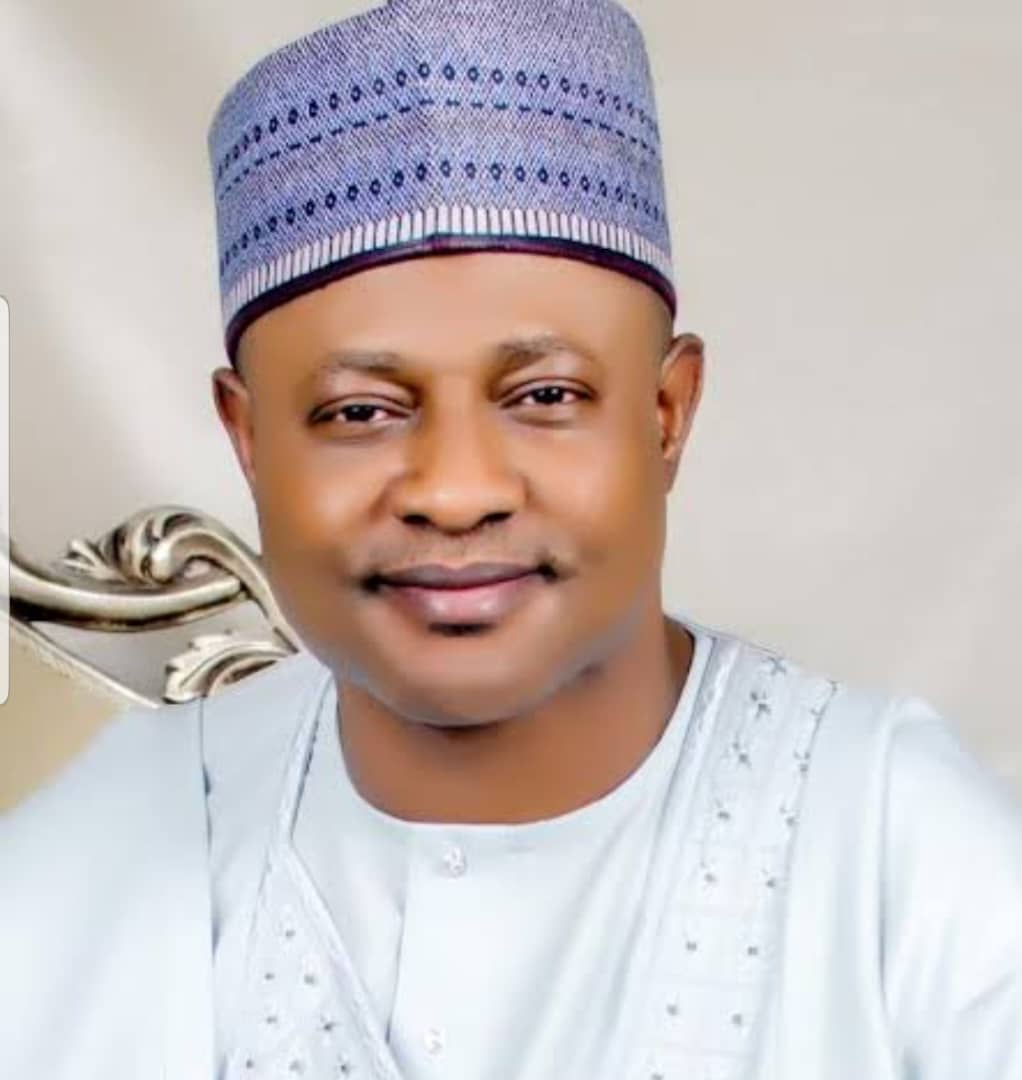
A Kaduna based political advocacy group, Capacity Movement, has criticised Senator Lawal Adamu Usman, popularly known as Mr. LA, over recent remarks perceived as attacks on the Kaduna State Governor, Senator Uba Sani.
In a statement issued to journalists in Kaduna, the group’s convener, Shehu Sani Sado, described the senator’s comments as “cheap political distractions” and accused him of attempting to divert attention from what it called his underwhelming performance at the National Assembly.
“The public is not even aware of any tangible contribution Senator Lawal Adamu has made since assuming office. His recent outbursts are simply aimed at gaining cheap popularity,” the statement read.
The group further alleged that Senator Adamu, who was elected on the platform of the Peoples Democratic Party (PDP), is making moves to defect back to the All Progressives Congress (APC) ahead of the next election cycle.
“After riding on the back of the PDP to get to the Senate, he is now plotting a return to the APC. Instead of focusing on delivering on his legislative mandate, he has resorted to constant and baseless attacks on Governor Uba Sani,” the group said.
The Capacity Movement called on the senator to refrain from what it termed politically motivated criticisms, and urged him to focus on his responsibilities in the Senate.
“Governor Uba Sani is committed to the development of Kaduna State and should not be distracted by a lawmaker who has yet to prove his worth. The people deserve focused leadership, not political theatrics,” the statement concluded.
ENDS
 Middle-Belt Times