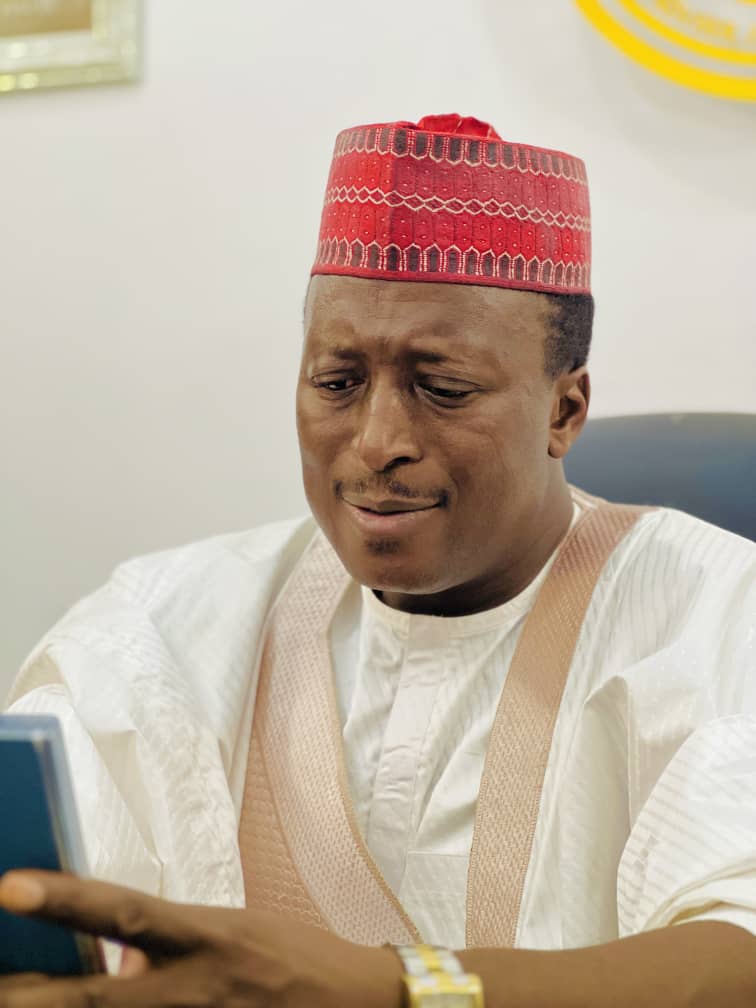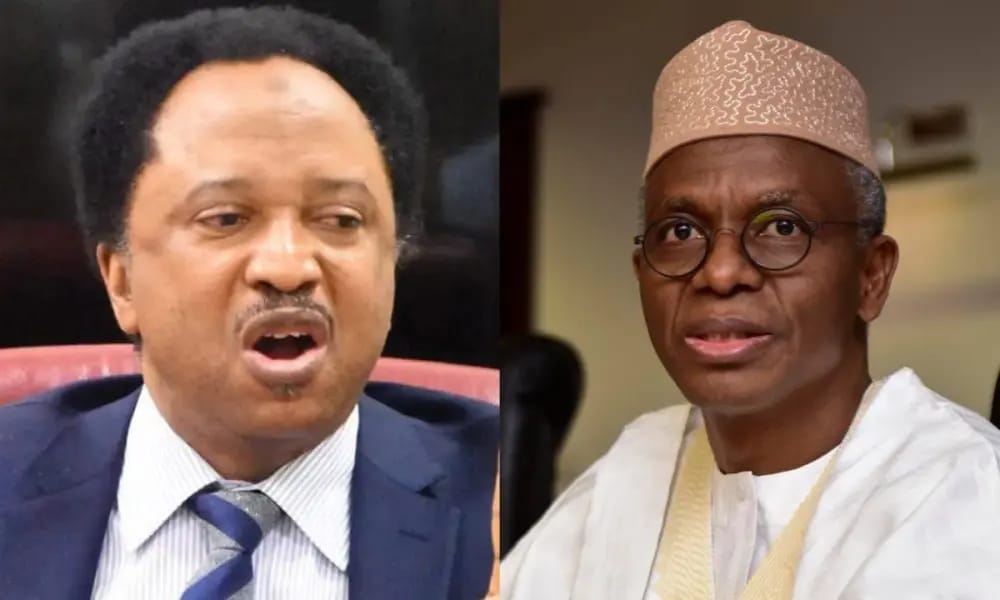
Northern  Group defends Defence Minister, Matawalle against CNG smear campaign

Grace Tesem

A Northern group under the auspices of of Arewa Joint Initiative for Peace (AJIP) on Thursday rallied behind Defence Minister, Mohammed Bello Matawalle, condemning a “political witch‑hunt” launched by the Coalition of Northern Groups (CNG) and other “unpatriotic” outfits.

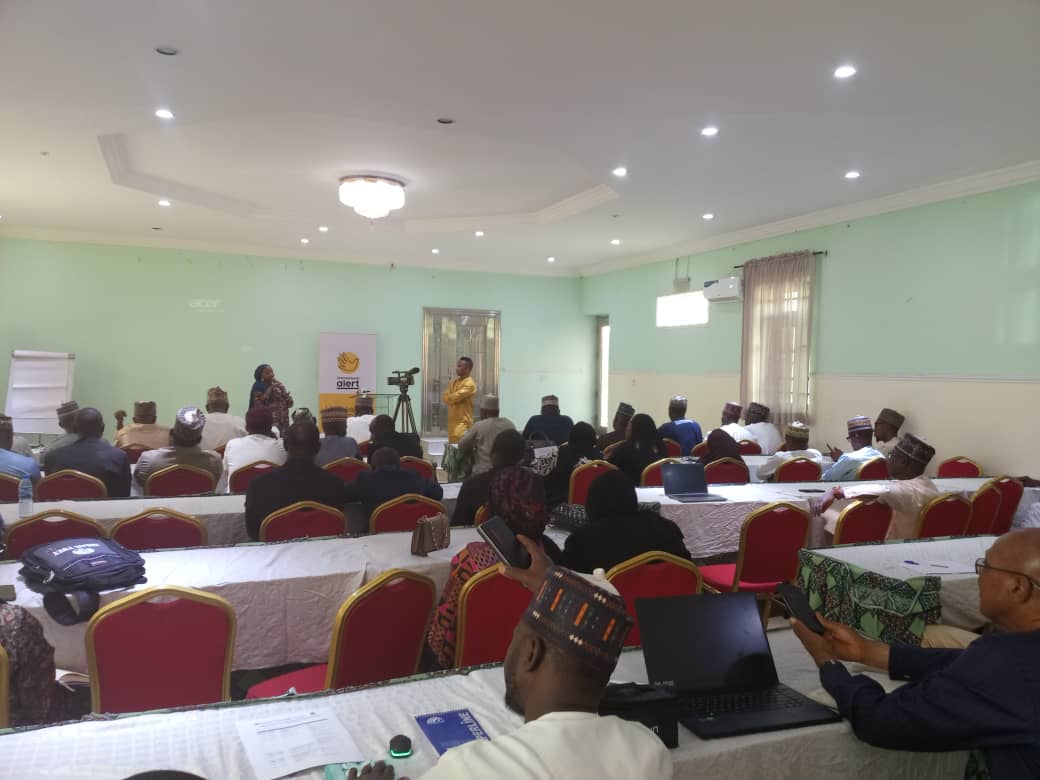
Addressing a press conference in Kaduna, the spokesperson of the group, Aminu Abbas Arabi said the CNG’s recent attacks on Matawalle are “a disservice to the people of Northern Nigeria” and amount to “misinformation and character assassination.”

He warned that the group’s “indecision” aligns it with forces of destruction rather than progress.

Arabi highlighted Matawalle’s record: bold action against banditry and insurgency, security‑reform initiatives, and sustained collaboration with local communities that have yielded tangible safety gains.

“To attack him is to attack the very foundation of peace we so desperately need,” he said.

The group also reached out to President Bola Tinubu, urging him to “be vigilant against the machinations of political merchants such as the CNG.”

AJIP warned that the CNG’s agenda is “self‑serving” and threatens the security strides made under Tinubu’s administration.

AJIP accused the CNG of “sowing division and discord” instead of fostering dialogue. “The challenges we face; banditry, insurgency, socio‑economic instability demand a united front, not fragmented factions that undermine one another,” Arabi added.

The coalition reaffirmed its firm support for Minister Matawalle, stressing that his leadership at the Ministry of Defence is “crucial for the ongoing efforts to restore order and safety across our regions.”

The group pleaded with all stakeholders; political leaders, civil‑society groups, and citizens to “unite in the pursuit of a peaceful and prosperous Northern Nigeria” and to reject the “divisive tactics” of the CNG.

The Coalition of Northern Groups (CNG) had recently expressed deep concern over what it described as grave and disturbing revelations contained in the recent confessional statements attributed to Musa Muhammad Kamarawa, a former aide to the current minister of state for defence, Bello Muhammad Matawalle.

The coalition said the allegations go beyond political controversy, saying they strike at the moral foundation of Nigeria’s security architecture; therefore raise critical questions about possible high-level complicity in the criminal networks fuelling insecurity across northern Nigeria.

A statement by CNG’s national coordinator, Comrade Jamilu Aliyu Charanchi, said Kamarawa reportedly detailed claims involving direct transfer of funds to a notorious bandit leader, Bello Turji, the procurement of dozens of Hilux vehicles for groups and the provision of extensive logistical support, including housing, cattle and other assets.

END.

SEPARATING FACT FROM FICTION: CONTEXTUALISING THE ALLEGATIONS AGAINST BELLO MATAWALLE

By: Dr. Lawal Umar Maradun, FNIPR, ARPA

In recent weeks, a surge of allegations and commentary concerning the former Governor of Zamfara State and current Honourable Minister of State for Defence, Dr. Bello Mohammed Matawalle, has dominated sections of the media and social platforms. While public scrutiny of office holders is both legitimate and essential in a democracy, such scrutiny must be anchored in facts, due process, and contextual accuracy—not conjecture, selective narratives, or partisan interpretation.

This intervention is neither an attempt to litigate public opinion nor a call for universal agreement. Rather, it seeks to clarify the record for stakeholders whose judgments are guided by evidence, institutional processes, and long-term national interest.

UNDERSTANDING BELLO MOHAMMED MATAWALLE

Born on February 12, 1969, in Maradun, Zamfara State, Dr. Bello Mohammed Matawalle is a trained educator, administrator, and political technocrat with over three decades of public service experience. He served as the Executive Governor of Zamfara State from 2019 to 2023, a period marked by some of the most complex security challenges in Nigeria’s recent history.

For over a decade prior to his tenure, Zamfara State had been at the epicentre of banditry, mass displacement, and kidnapping for ransom. Upon assuming office, Matawalle adopted a multi-layered strategy that combined security operations with dialogue, community engagement, and intelligence-led interventions. Within his first year, the state recorded a notable reduction in violent incidents—an outcome widely acknowledged at the time as a departure from previous inertia.

POST-TENURE SCRUTINY AND POLITICAL CONTEXT

Following the conclusion of his tenure in 2023, Matawalle became the subject of sustained criticism, much of which relies on retrospective reinterpretations of his policies and actions. During the 2023 general elections, he also served as the North-West Zonal Coordinator for the Tinubu/Shettima presidential campaign, a role widely credited by party stakeholders as instrumental in consolidating electoral support across the region.

His brief absence from public view after the elections was interpreted by some commentators as evasion, particularly amid publicised allegations involving the Economic and Financial Crimes Commission (EFCC). However, Matawalle re-emerged publicly in Abuja ahead of the May 29, 2023 presidential inauguration, attending official state functions without hesitation—conduct inconsistent with claims of a public official “in hiding.”

UNDERSTANDING THE ALLEGATIONS IN PROPER CONTEXT

The allegations currently circulating broadly fall into three categories:

  1. Claims of financial impropriety during his tenure as governor, largely driven by political successors and commentators.
  2. Mischaracterisation of security dialogue initiatives, portrayed by some as complicity rather than conflict-resolution strategies.
  3. Opinion-based conclusions that presume guilt in the absence of judicial determination.

It is critical to distinguish between allegations under review, administrative or investigative processes, and established facts. Much of the prevailing discourse collapses these distinctions, resulting in misleading conclusions and reputational damage unsupported by legal findings.

CLARIFYING THE FACTS

Several facts deserve emphasis:

No court of competent jurisdiction has found Dr. Bello Matawalle guilty of any wrongdoing. Engagements with anti-corruption or oversight institutions where they exist are procedural mechanisms, not verdicts. Financial governance during Matawalle’s administration followed approved budgetary frameworks and was subject to statutory audits and legislative oversight, consistent with constitutional requirements for state governments.

Conflating investigative processes with criminal conviction not only misrepresents reality but also undermines the credibility of accountability institutions themselves.

MEDIA AMPLIFICATION AND POLITICAL INCENTIVES

An examination of how these allegations are amplified reveals a familiar pattern: partisan actors, politically motivated platforms, and commentators who often substitute outrage for verification. In such environments, “media trialism” thrives—where individuals are tried and sentenced in the court of public opinion long before due process is allowed to run its course.

Several respected journalists and policy analysts have warned that this trend erodes public trust, weakens institutions, and distorts democratic accountability.

DUE PROCESS IS A DEMOCRATIC STRENGTH

Dr. Matawalle has consistently affirmed his respect for lawful institutions and due process. In a functioning democracy, the presumption of innocence is not a favour it is a right. Investigations must be allowed to conclude independently, and outcomes must rest on evidence, not volume or virality.

History repeatedly shows that many high-profile allegations lose credibility once subjected to forensic scrutiny. This reality underscores why restraint—not a rush to judgment—defines responsible citizenship and ethical journalism.

A CALL FOR BALANCE, NOT SILENCE

This moment does not call for blind loyalty or uncritical defence. It calls for balance.

Public officials must remain accountable. Institutions must be allowed to work. Citizens must demand accuracy over amplification. Dr. Matawalle’s record, like that of any public servant, should be evaluated holistically—through verified facts and lawful outcomes, not fragmented narratives designed to inflame rather than inform.

CONCLUSION: TRUTH HAS A TIMELINE

Reputations are often tested during moments of political uncertainty. But truth is rarely rushed and never replaced by rumour. Where institutional processes are ongoing, the responsible position is to allow due process to speak, facts to lead, and time to separate allegation from reality.

In the end, credibility is not built by shouting the loudest, but by standing firmly on verifiable truth.

Dr. Lawal Umar Maradun is a journalist and Corporate Affairs Manager, Nigerian Agricultural Insurance Corporation, Abuja.

Group Dismisses Dangote’s Claims Against NMDPRA Chief, Passes Vote of Confidence on Farouk

The Forum for Good Governance and Economic Development (FGGED) has dismissed recent claims allegedly made by the President of Dangote Group, Alhaji Aliko Dangote, against the Chief Executive Officer of the Nigerian Midstream and Downstream Petroleum Regulatory Authority (NMDPRA), Engr. Farouk Ahmed, describing the allegations as unfounded, misleading and capable of undermining regulatory stability in the petroleum sector.

In a statement issued today and made available to Journalists, the forum said it had carefully reviewed the claims attributed to Dangote and found them to be “lacking in factual basis and unsupported by regulatory or operational realities within the downstream petroleum industry.”

The Forum in the Statement signed by its Secretary,Dr. Abraham Japhet further passed a vote of confidence on Engr. Ahmed, commending his leadership of the NMDPRA and his commitment to transparency, due process and strict adherence to the provisions of the Petroleum Industry Act (PIA).

According to the forum, since assuming office, the NMDPRA under Ahmed has implemented key reforms aimed at sanitising the downstream sector, improving regulatory oversight, ensuring fair competition and protecting the interests of consumers and investors alike.

“The NMDPRA boss has demonstrated professionalism and independence in the discharge of his duties, resisting undue pressure from vested interests while prioritising national interest,” the statement said.

FGGED warned against what it described as attempts by powerful corporate actors to intimidate or discredit regulators in order to secure favourable outcomes, stressing that no individual or company should be allowed to undermine institutions established by law.

The forum urged stakeholders in the oil and gas industry to engage constructively with regulators and utilise established dispute-resolution mechanisms rather than resorting to public statements that could erode investor confidence and destabilise the sector.

It also called on the Federal Government to continue to support the NMDPRA in the effective implementation of the PIA, noting that a strong and independent regulator is critical to the sustainability and growth of Nigeria’s petroleum industry.

The group reaffirmed its support for reforms in the oil and gas sector and pledged to continue to defend public institutions and officials who act in accordance with the law and in the best interest of the country.

Group Defends FIRS Chairman, Dismisses Calls for Suspension Over France MoU


A pro-revenue advocacy group, alongside several civil society voices under the umbrella of the Forum for Economic Recovery and Development (FERD), has defended the Executive Chairman of the Federal Inland Revenue Service (FIRS), Dr. Zacch Adedeji, over criticisms trailing a recently signed Memorandum of Understanding (MoU) between the FIRS and France’s Direction Générale des Finances Publiques (DGFiP).

In a statement issued on Tuesday and made available to journalists, the group described calls for Dr. Adedeji’s suspension over the MoU as “baseless, malicious and politically sponsored,” warning that such attacks were aimed at undermining ongoing tax administration reforms that have contributed to improved revenue collection.

The statement, signed by FERD’s President, Dr. Ibrahim Mohammed, said critics of the agreement had failed to present any verifiable evidence to support claims that the MoU would hand over control of Nigerian taxpayers’ data to France.

According to the group, the pact, signed on December 10, 2025, is a technical assistance and capacity-building arrangement designed to modernise Nigeria’s tax administration through the exchange of expertise in digital tax tools, automated compliance systems and data analytics.

“We must have trust in our public institutions,” the statement said. “The FIRS has clearly stated that the MoU does not grant France access to Nigerian taxpayer databases, digital systems or operational infrastructure. Existing Nigerian data protection and cybersecurity laws remain fully applicable, and these assurances should be accepted until proven otherwise.”

FERD expressed concern that, despite these assurances, several political parties, regional groups and civil society organisations had continued to criticise the agreement, arguing that it could threaten national sovereignty and expose sensitive economic data.

The group noted that recent public statements by the FIRS had emphasised that the collaboration is a non-executive, advisory arrangement focused on skills transfer, adding that the agency would continue to work with Nigerian technology firms and payment processors within a multi-channel revenue collection framework.

“Independent tax policy experts would ordinarily not oppose technical cooperation with advanced tax authorities if it can accelerate modernisation,” the statement added. “However, we urge the government to remain transparent about the scope of data sharing, the safeguards in place, and the procurement and oversight mechanisms that will protect Nigerians’ information.

“However, we gathered that the controversy has begun to attract the attention of lawmakers and opposition parties, with some calling for the MoU to be presented before the National Assembly or for a comprehensive public briefing on its terms.

We therefore suggest that the FIRS and the Federal Government may need to move swiftly to provide clearer details on legal safeguards, data-handling protocols and the role, if any, that foreign agencies or vendors will play in Nigeria’s future revenue collection systems.

The group concluded that the handling of the issue will be critical to shaping public confidence in Nigeria’s digital tax transformation and the credibility of the reforms being pursued by the FIRS under Dr. Adedeji’s leadership.

Group Defends FIRS Boss Over Tax Deal With France

A pro-revenue advocacy group, alongside several civil society voices under the umbrella of the Forum for Economic Recovery and Development (FERD), has defended the Executive Chairman of the Federal Inland Revenue Service (FIRS), Dr. Zacch Adedeji, over criticisms trailing a recently signed Memorandum of Understanding (MoU) between the FIRS and France’s Direction Générale des Finances Publiques (DGFiP).

In a statement issued on Tuesday and made available to journalists, the group described calls for Dr. Adedeji’s suspension over the MoU as “baseless, malicious and politically sponsored,” warning that such attacks were aimed at undermining ongoing tax administration reforms that have contributed to improved revenue collection.

The statement, signed by FERD’s President, Dr. Ibrahim Mohammed, said critics of the agreement had failed to present any verifiable evidence to support claims that the MoU would hand over control of Nigerian taxpayers’ data to France.

According to the group, the pact, signed on December 10, 2025, is a technical assistance and capacity-building arrangement designed to modernise Nigeria’s tax administration through the exchange of expertise in digital tax tools, automated compliance systems and data analytics.

“We must have trust in our public institutions,” the statement said. “The FIRS has clearly stated that the MoU does not grant France access to Nigerian taxpayer databases, digital systems or operational infrastructure. Existing Nigerian data protection and cybersecurity laws remain fully applicable, and these assurances should be accepted until proven otherwise.”

FERD expressed concern that, despite these assurances, several political parties, regional groups and civil society organisations had continued to criticise the agreement, arguing that it could threaten national sovereignty and expose sensitive economic data.

The group noted that recent public statements by the FIRS had emphasised that the collaboration is a non-executive, advisory arrangement focused on skills transfer, adding that the agency would continue to work with Nigerian technology firms and payment processors within a multi-channel revenue collection framework.

“Independent tax policy experts would ordinarily not oppose technical cooperation with advanced tax authorities if it can accelerate modernisation,” the statement added. “However, we urge the government to remain transparent about the scope of data sharing, the safeguards in place, and the procurement and oversight mechanisms that will protect Nigerians’ information.

“However, we gathered that the controversy has begun to attract the attention of lawmakers and opposition parties, with some calling for the MoU to be presented before the National Assembly or for a comprehensive public briefing on its terms.

We therefore suggest that the FIRS and the Federal Government may need to move swiftly to provide clearer details on legal safeguards, data-handling protocols and the role, if any, that foreign agencies or vendors will play in Nigeria’s future revenue collection systems.

The group concluded that the handling of the issue will be critical to shaping public confidence in Nigeria’s digital tax transformation and the credibility of the reforms being pursued by the FIRS under Dr. Adedeji’s leadership.

Benue, Plateau Christian Groups Commend Senator Abdulaziz Yari for Peace Intervention

Christian groups from Benue and Plateau states have commended former Zamfara State Governor and Senator representing Zamfara West, Senator Abdulaziz Yari, for what they described as his landmark efforts toward ensuring sustainable peace and unity in Northern Nigeria.

The groups, drawn from various Christian associations and community leaders across the two states, expressed their appreciation in a joint statement issued on Sunday, noting that Senator Yari’s intervention came at a critical time when the region has continued to grapple with recurring communal tensions and security challenges.

According to the statement sign by Reverend Innocent Ogbanje and Pastor Peter Lange , Senator Yari has demonstrated uncommon statesmanship by rising above political, ethnic and religious divides to engage stakeholders in genuine dialogue aimed at fostering peaceful coexistence.

The groups said his approach, which emphasizes inclusiveness, mutual respect and justice, has helped to douse tension and restore confidence among communities affected by protracted conflicts.

They noted that his recent consultations with traditional rulers, religious leaders, youth groups and security agencies in parts of the North, particularly in Benue and Plateau states, sent a strong message that peacebuilding requires collective responsibility and sincere leadership.

“Senator Abdulaziz Yari has shown that peace is achievable when leaders are willing to listen, engage and act in the interest of all, irrespective of faith or background,” the statement read.

“His intervention has rekindled hope among our people and reinforced the need for unity as the only pathway to sustainable development in the region.”

The Christian groups further applauded the senator for promoting interfaith understanding, describing his outreach to Christian leaders as a significant step toward bridging trust gaps and addressing long-standing grievances. They said such efforts are crucial in countering narratives of division and in strengthening the bonds of brotherhood among diverse communities in the North.

While calling on other political leaders to emulate Senator Yari’s example, the groups urged the federal and state governments to complement such initiatives with concrete policies that address the root causes of conflict, including poverty, unemployment and weak justice mechanisms.

They reaffirmed their commitment to peace and pledged to continue working with Muslim groups, traditional institutions and government authorities to sustain dialogue and prevent future crises.

The groups concluded by praying for wisdom and strength for leaders championing peace across the region, stressing that the stability of Northern Nigeria remains vital to the unity and progress of the country as a whole.

Ganduje’s Independent Hisbah Initiative, a recipe for dangerous politicization of religion

By Aminu Hussaini

“Nigeria’s history is replete with examples of how religious tensions can escalate into violence and instability. In this opinion, the writer examine the proposed Independent Hisbah initiative by Dr. Abdullahi Umar Ganduje, former Governor of Kano State, and warned that at moments of national anxiety, leadership is revealed not by noise but by restraint.”

In an era when insecurity stalks daily life and the national mood is brittle with fear, any political actor who toys with public order, pursues disaster. This is why the recent push to create an “independent Hisbah Fisabilillah” by former Kano State Governor Abdullahi Umar Ganduje deserves no applause, but serious public scrutiny.

Let us be clear: this is not a debate about faith, morality or the place of religion in society. Kano has long negotiated the coexistence of culture, belief and governance. The issue at hand is far more troubling—an apparent insensitivity to the risks of insecurity and social fracture, wrapped in a desperate bid to salvage fading political relevance.

At a time when Nigerians are weary—of violence, of economic hardship, of the weaponization of identity—the introduction of a parallel moral enforcement structure outside established legal frameworks is not courage. It is recklessness!

A Dangerous Nostalgia for Control: The attempt for an “independent” Hisbah is a loaded action. Independence from what, exactly? From the law? From due process? From democratic accountability?

In a country grappling with armed non-state actors, vigilantism and the erosion of trust in institutions, proposing another body with coercive overtones is a provocative gamble with public safety. It is difficult to escape the conclusion that this move is less about public morality and more about political resurrection. When relevance wanes, spectacle often follows. Creating a moral panic, positioning oneself as the guardian of values and daring the state to react—these are old tricks in the populist handbook. But old tricks can still cause new damage.

Kano Government’s Quiet Strength- Against this backdrop, the response of the Kano State Government under the leadership of AKY has been instructive. Rather than descend into political mudslinging or ideological confrontation, the government has chosen the unglamorous but essential path: law, due process and public-order mechanisms. This is leadership that understands the moment- Instead of escalating tension, the state has emphasized that security and social regulation must remain within constitutionally recognized institutions. Instead of politicizing faith, it has grounded its response in legality. Instead of street-level theatrics, it has opted for calm institutional clarity. In a fragile national environment, this restraint matters. Public order is not maintained by competing power centers but by coherence. Justice is not served by parallel authorities but by transparent and accountable systems.

Faith Is Not a Political Lifeline- There is something particularly tragic about invoking religion as a political lifeline. Faith, for millions, is sacred, personal and unifying rather than devising. To deploy it as a tool for political comeback cheapens its moral authority and risks inflaming divisions that the country can ill afford.
The danger is not hypothetical. History—both local and global—is littered with examples where unofficial moral enforcers became instruments of intimidation, selective justice and social fear. In today’s Nigeria, with its volatile mix of economic stress and security threats, such experiments are not just ill-advised; they are irresponsible!

The Choice Before Us- Kano stands at a crossroads that mirrors Nigeria’s broader dilemma: do we address our challenges through institutions or impulses? Through law or loudness? Through governance or grandstanding? The Kano State Government has, so far, chosen the harder but wiser road. It has refused to be baited into confrontation. It has prioritized public order over political drama. That choice deserves recognition, not because it is perfect, but because it is principled. In times like these, leadership is not about who shouts the loudest or claims the highest moral ground. It is about who understands that stability is fragile, that insecurity feeds on confusion and that politics should never be allowed to masquerade as piety.

Nigeria has enough fires burning. The country do not need desperate matches struck in the name of relevance.

Barrister Aminu Hussaini is Special Adviser to the Governor of Kano State – AKY on Justice/Constitutional Matters – could be reached on +234 8033742424 – aminuhussaini173@gmail.com

Group Dismisses Allegations Against CAC Registrar-General

The National Forum for Good Governance (NFGG) has dismissed allegations of misconduct leveled against the Registrar-General of the Corporate Affairs Commission (CAC), Hussaini Ishaq Magaji, SAN, describing the claims as unfounded, malicious and politically motivated.

The allegations followed a petition formally received by the House of Representatives, calling for an investigation into the alleged unlawful tampering with the corporate records of Jonah Capital Nigeria Ltd and Houses for Africa Nigeria Ltd by the CAC Registrar-General.

The petition, written on behalf of the two companies, alleged that some corporate records were altered to favour a contending party in an internal dispute.

However, in a statement issued on Sunday, the National Chairman of the forum, Chairman is Dr Mukhtar Mustapha Bebeji, expressed strong confidence in the integrity, professionalism and leadership of Magaji, insisting that the accusations lacked credible evidence.

According to the forum, a careful review of the allegations revealed no verifiable facts to support the claims, adding that the accusations appeared aimed at discrediting the CAC and undermining public confidence in a key regulatory institution.

“The National Forum for Good Governance wishes to categorically state that after a thorough review of the claims being circulated, we find the allegations against the CAC Registrar-General to be baseless and unsupported by any credible or verifiable facts,” the statement read.

The forum urged members of the public and stakeholders to exercise restraint and avoid spreading unverified information capable of damaging the reputation of public institutions.

It advised aggrieved parties to seek redress through lawful and established channels, stressing that genuine concerns should be directed to appropriate regulatory and oversight bodies to allow for due process and fair investigation.

Alhaji Bebeji also commended the Corporate Affairs Commission for its ongoing reforms aimed at simplifying business registration processes, strengthening regulatory compliance and improving Nigeria’s ease of doing business.

The forum further appealed to the media to uphold ethical journalism standards by ensuring accuracy, balance and fairness in reporting, and cautioned against amplifying allegations that have not been substantiated.

Turji confirms peace talk, denies collecting ₦30m as claimed by Kamarawa

Notorious bandits’ leader, Bello Turji, has confirmed that he held series of peace meetings with then Zamfara State Government during former governor Bello Muhammad Matawalle, now Minister of State for Defence for peaceful resolution between Fulani groups.

In a viral video online, the bandit kingpin strongly denied claims that he was paid ₦30 million or given vehicles as part of the engagement.

Turji’s response followed allegations by on Musa Kamarawa, a former peace mediator appointed by the Sokoto and Zamfara State governments to bring bandits to a table of negotiations in order to end banditry activities through a non-kinetic efforts.

In a similar video, Musa had claimed that the former governor of Zamfara state Matawalle held a series of meetings with bandits, including Turji, at the Government House in Gusau and allegedly gave out money and vehicles to them.

Kamarawa specifically alleged that Turji received ₦30 million during the peace process.

However, in a viral video message circulated online, Turji described the claims as false, insisting that although peace talks took place, he never received such payments or any other Fulani leader on his behalf.

“By Allah, since I was born, I have never possessed even five million naira,” Turji said. “What I am doing is not for personal gain. We were never given that ₦30 million you are talking about.”

According to Turji, the meetings with government officials were part of a peace initiative aimed at reducing violence in the state and maintained that he did not personally benefit financially from the process.

He accused Kamarawa of betraying the trust established during the negotiations and giving what he described as “false, mischief testimony.”

“We agreed on peace when the Zamfara State government appointed you,” Turji said in the message, addressing Musa Kamarawa. “But what you are saying now is full of lies, deceit, I did not even receive three million naira.”

The bandits’ leader also accused former political leaders in Zamfara and Sokoto states of contributing to the insecurity in the region long time before Matawalle’s era, alleging that they armed groups of people known as ‘Yan Banga’ and encouraged the formation of vigilantes that targeted mostly Fulani communities.

He specifically mentioned former governors of Zamfara and Sokoto states, Attahiru Bafarawa as well as former Zamfara governor, Senator Ahmed Sani Yerima, calling for their arrest and investigations.

“We say openly that former governors of Zamfara and Sokoto, Bafarawa alongside Ahmed Sani Yerima, are responsible for the calamities that befell these states,” Turji claimed.

Turji sought to distance himself from political influence, insisting that he was not acting on behalf of any politician or interest group.

“We are not politicians, and we are not tools of politicians,” he said. “There is no human being backing us.”

Thought Turji did not talk about recent negotiations with federal government, instead, he framed his comments as a personal defence, saying he was speaking “before Allah alone.”

Nigerian security agencies have repeatedly identified Bello Turji as one of the most dangerous armed group leaders operating in the North-West, with the military previously declaring him wanted over terror-related activities.

Group  Backs Matawalle, Rejects ‘Baseless’ Calls for His Removal

By Mike Odeh James

The Arewa Joint Initiative for Peace (AJIP) has declared its unwavering support for the Minister of Defence, Bello Matawalle, dismissing ongoing calls for his removal as unfounded and politically motivated.

The group described the campaign against Matawalle as a misguided effort allegedly sponsored by Zamfara State Governor, Dauda Lawal, warning that such actions undermine national unity and ongoing efforts to address insecurity in the North.

In a statement signed by its Director-General, Musa Danbaki, AJIP said the move to discredit the Defence Minister was rooted in desperation rather than genuine concern for national security.

“It is imperative to recognize that the recent political maneuvers by Governor Lawal are borne out of desperation,” the statement said. “As a leader who has consistently aligned himself with bandit leaders, Lawal’s attempts to discredit Minister Matawalle stem from a fear of exposure.”

According to the group, Matawalle has remained a consistent advocate for peace and security, working to dismantle violent networks that have plagued communities across the region.

“Matawalle has been a stalwart advocate for peace and security in our region, tirelessly working to dismantle the networks of violence that have plagued our communities,” the statement noted. “His commitment to transparency and accountability threatens the very foundations of Lawal’s alliances, forcing the governor to seek distractions through baseless allegations against a man who has dedicated his life to national service.”

AJIP further argued that the calls for Matawalle’s removal go beyond personal attacks, describing them as part of a broader political strategy aimed at weakening President Bola Ahmed Tinubu’s political support base ahead of the 2027 elections.

“By targeting Matawalle, who has emerged as a key pillar of support for the President in the North, detractors seek to destabilize the administration’s efforts to foster stability and growth in the region,” the group said.

The group commended the Defence Minister’s performance in office, crediting him with policies that have contributed to improvements in Nigeria’s security landscape.

“Under his stewardship, there has been a concerted effort to engage communities, empower local leaders, and create sustainable pathways to peace,” the statement said. “His initiatives address not only banditry but also the socio-economic drivers of unrest.”

AJIP reaffirmed its solidarity with President Tinubu, stressing that unity and collaborative leadership remain critical to overcoming Nigeria’s security challenges.

“We must reject divisive rhetoric and focus on dialogue, cooperation, and support for leaders committed to the welfare of our people,” the statement added.

The group urged citizens of Zamfara State and the wider Northern region to resist what it described as misinformation and to stand firmly behind Matawalle and the Tinubu administration.

“The strength of our region lies in unity against common threats,” AJIP said. “We must not allow personal vendettas to distract us from the greater good.”

AJIP concluded by reiterating its full support for Minister Bello Matawalle and called on Nigerians to remain vigilant against narratives designed to undermine peace, security, and national cohesion.

ENDS.