Faith group joins Equity Health Group to bring 1,000 mobile clinics to underserved Nigerian communities

By Mike Abu , Kaduna

In a significant step toward closing Nigeria’s healthcare access gap, the Northern Christian Association (NCA)—formerly the Northern chapter of CAN—has entered into a memorandum of understanding (MoU) with Equity Health Group and partners Doktorconnect and United International HMO. The agreement will see 1,000 containerised clinics deployed across the country, with priority given to hard-to-reach communities, especially in Northern Nigeria where quality healthcare remains scarce.

In a statement personally signed and released to journalists in Kaduna on Friday, NCA Chairman Rev. Joseph John Hayab explained that the agreement—signed alongside Dr. Princess Ibe at Equity Hospital in Lekki, Lagos—marks a strategic partnership between the Christian body and private health stakeholders.

Rev. Hayab underscored the role of faith-based organisations in grassroots development, noting that the NCA’s widespread network would be crucial for reaching vulnerable populations. He said the initiative would help fill the gap in regional clinics across the north, complementing government and private healthcare delivery for millions of Nigerians, particularly those in rural and insecure areas.

Each containerised clinic, he added, will provide basic medical consultations, maternal and child healthcare, vaccinations, diagnostic services, and telemedicine-enabled consultations.

Dr. Princess Ibe of Equity Health Group described the project as a reflection of her organisation’s commitment to innovative healthcare delivery. She said blending physical clinics with digital health tools and insurance coverage would help build a more inclusive and sustainable system.

Northern Nigeria remains a priority due to its low doctor-to-patient ratios and severe healthcare infrastructure deficits. The containerised model allows rapid deployment even in areas with poor infrastructure or security challenges, offering both flexibility and scalability.

The rollout of 1,000 clinics is expected to improve primary healthcare outcomes significantly while creating jobs for health professionals and support staff. The project will proceed in phases, beginning with the highest-need regions, especially across the north.

Governor Umar Namadi @63: A Life of Purpose, A Legacy of Inclusive Leadership

By: Yunusa Hamza (Tafidan Farin Dutse)
At sixty-three, Governor Umar Namadi stands not merely as a public office holder, but as a compelling symbol of purposeful leadership, moral clarity, and people-centred governance.

His life journey was rooted in discipline, shaped by service, and guided by integrity which offers both inspiration and instruction in an era where leadership is often tested by complexity and competing expectations, especially in a multi geo and diverse communities like Jigawa State
Governor Umar Namadi’s formative years were defined by resilience, humility, modest and a deep appreciation for community values. His professional ascension, particularly in the financial and administrative sectors, was marked by diligence and an unwavering commitment to transparency. As a Fellow Chartered Accountant (FCA), he cultivated a reputation for prudence, accountability and an embodiment of good governance, a trait that later become the cornerstone of his public service ethos.
Governor Umar Namdi’s transition into politics was not driven by ambition alone, but by a sense of duty to contribute meaningfully to societal progress, rising through the ranks, he served with distinction both within the private and the Public notably as a Commissioner of Finance to Deputy Governor, Governor Umar Namdi demonstrated loyalty, competence, and a collaborative spirit. These qualities prepared him for the greater responsibility he now bears as the Executive Governor of Jigawa State.

Governor Namadi’s leadership exemplifies inclusivity in both vision and execution. He governs with a deliberate openness, ensuring that policies reflect the needs and aspirations of diverse communities be it urban and rural, young and old, privileged and underserved. His administration has consistently emphasized participatory governance, recognizing that sustainable development is anchored in collective ownership.

Equally defining is his honesty, an attribute that has earned him public trust and institutional credibility. In a political climate often clouded by scepticism, Governor Umar Namadi’s integrity stands out as a refreshing constant. He leads not with rhetoric, but with results, not with grandstanding, but with grounded action. His financial discipline and transparent governance have fostered confidence among citizens and stakeholders alike.

Above all, Governor Umar Namadi embodies commitment of purpose. His developmental agenda is not episodic but strategic focused on long-term impact rather than short-term applause, from strengthening education and healthcare systems to advancing agricultural productivity and infrastructural growth, his policies reflect a coherent vision for a prosperous and self-reliant Jigawa State.

At 63, the life of Governor Umar Namadi is a testament to the power of consistency, character, and conviction. He reminds us that leadership is not merely about occupying office, but about uplifting lives, building institutions, and leaving behind a legacy of hope, in fact it is worth noting that ‘’Sixty-three teaches that strength is not loud—it is steady.”

In celebrating Governor Umar Namadi this season, we celebrate more than a birthday rather, we celebrate a life devoted to service, a leader defined by inclusivity, honesty, and unwavering commitment to purpose.

On a final note, as a celebrant @63rd we all believe and agree that it is not a milestone of aging, but a celebration of significance and a clear testament to a life that has gathered meaning, shaped others, and it will in sha Allah continues to inspire, as the saying goes, “Sixty-three is not the sunset of life rather it is the golden hour where everything glows with purpose.”

This piece is written and submitted by Yunusa Hamza (Tafidan Farin Dutse) of Gwaram Local Government Jigawa State. Can be reached via yunusafarindutse@gmail.com +234-080 34 44 5493

Terror Moves to the Cities: Nigeria’s Security Architecture Is Failing as Easter Attacks Strike Urban Centres

Mairiga Tanimu

What was once dismissed as a rural crisis has arrived in Nigeria’s towns and cities — and a powerful coalition of southern and Middle Belt leaders says the federal government’s policies are directly to blame.

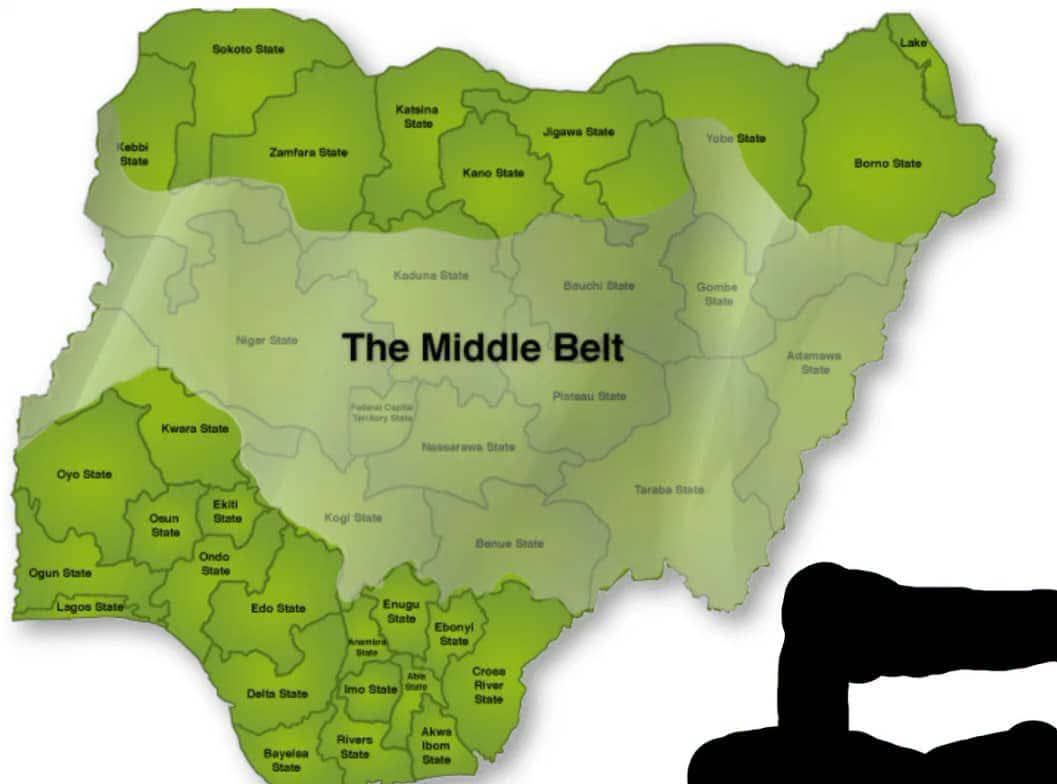
The Southern and Middle Belt Leaders’ Forum (SMBLF) sounded the alarm Thursday as a pattern emerged from two weeks of near-continuous violence: attacks that once targeted remote farming villages are now striking urban neighbourhoods, including Jos metropolis, the capital of Plateau State.

No fewer than 40 people were killed when gunmen struck Unguwan Rukuba — inside Jos — on Palm Sunday, alongside a simultaneous attack on Kahir Village in Kagarko County, Kaduna State. The following week, violence hit Gwer community in Benue State, killing at least 17; Nyago Gyel in Plateau State, leaving 3 dead; and Akyawa and Udege Kasa in Nasarawa State, where 11 were killed. Before those strikes, Boko Haram sacked Ngoshe town in southern Borno and detonated bombs in three locations across Maiduguri town. Kautikari, near Chibok, lost at least 12 residents to an Islamist terrorist raid. Nuku and Woro communities in Kwara State were attacked, with 170 people reported killed.

“What was reduced to mostly rural violence some years back is now creeping back into cities,” the SMBLF warned.

The forum, comprising the Middle Belt Forum, Afenifere, Ohanaeze Ndigbo Worldwide, and PANDEF, said the geographic expansion of violence was not accidental — it was the predictable consequence of a federal security policy that has consistently rewarded perpetrators and abandoned victims.

At the centre of that critique is Operation Open Corridor, a government program that spends billions of naira rehabilitating disengaged terrorists — feeding, clothing, training, and reintegrating them into society. The SMBLF called for its immediate abolition, arguing the program sends a clear signal to active terrorists that violence carries no lasting consequence.

That signal, the forum said, has been reinforced from the top. Chief of Defence Staff Lt. Gen. Olufemi Olatubosun Oluyede recently referred to terrorists as “prodigal sons” to be welcomed back. National Security Adviser Nuhu Ribadu described bandits and terrorists as “our brothers that we must live with.” The SMBLF said these statements reflect a broader institutional tolerance for mass violence that has allowed the crisis to metastasize from forests and rural communities into urban centres.

While terrorists are rehabilitated, their victims are warehoused. Displaced persons from attacks across the Northeast and Middle Belt remain in overcrowded IDP camps with no adequate food, shelter, healthcare, or security — a situation the forum described as both unjust and deliberately overlooked by the government.

The SMBLF also condemned state-level amnesty and pardon grants to bandits, saying there was no evidence any such measure had reduced violence. The pardons, the coalition argued, have consistently been read by criminal networks as institutional weakness, accelerating rather than deterring further attacks.

The forum is demanding a full overhaul of Nigeria’s security architecture, with clear accountability frameworks, stronger intelligence infrastructure, and properly equipped and motivated security forces. It is also calling for the regulated liberalization of civilian access to legal firearms — urging controlled distribution to responsible citizens and community-based security groups as an immediate stopgap where federal forces have proven unable to respond in time.

“Nigeria stands at a dangerous crossroads,” the statement concluded. “The current approach is failing, and time is running out.”

The statement was signed by HRM Oba Oladipo Olaitan, leader of SMBLF and Afenifere; Dr. Bitrus Pogu, president of the Middle Belt Forum; Senator John Azuta-Mbata, president-general of Ohanaeze Ndigbo Worldwide; and Ambassador Godknows Igali, national chairman of PANDEF.

NDI-ABAT Apologises To Seun Okinbaloye Over Wike’s ‘Shoot’ Comment

BY James Luka

Kaduna

The Ndigbo for Tinubu 2027 Forum (NDI-ABAT) has apologised to Channels Television anchor, Seun Okinbaloye, over a controversial remark allegedly made by the Minister of the Federal Capital Territory, Nyesom Wike.

In a statement issued on Monday and jointly signed by its National Coordinator, Okechukwu Isiguzoro, and Secretary General, Ugwuoke Ugwuoke, the group described the comment as a joke that had been widely misinterpreted.

NDI-ABAT said it was offering an unreserved apology to Okinbaloye, noting that the remark, made during a recent media parley in Abuja, had generated backlash and controversy.

The group explained that Wike’s comment was intended as a light-hearted expression and not a threat, adding that the situation had been taken out of context by some political actors, including members of the opposition coalition.

“We believe it is both prudent and patriotic to intervene and clarify that the statement was made in jest,” the forum said.

According to the group, Okinbaloye had since confirmed that Wike personally reached out to him after the incident to explain his remarks, and that both parties had resolved the issue amicably.

NDI-ABAT, however, clarified that it was not speaking on behalf of the FCT minister but acted out of what it described as civic responsibility, citing Wike’s support for President Bola Ahmed Tinubu.

The group also urged opposition figures, particularly within the African Democratic Congress (ADC), not to politicise the matter further.

“It is unnecessary to inflame an issue that has already been resolved between the individuals concerned,” the statement added.

The forum expressed hope that the clarification would calm tensions on social media and encourage more responsible public discourse.

Expose the Thieves! Step Up Nigeria Launches Explosive Whistleblower Competition, Calling Young Nigerians to Wage War on Corruption

Adamu Adamu

Abuja — Step Up Nigeria, in partnership with the Platform to Protect Whistleblowers in Africa, has launched the 2026 World Whistleblower Day Art and Media Competition, calling on young Nigerians to use creative expression to promote transparency and accountability.

The initiative was unveiled at a press briefing in Abuja, where the organisation highlighted the need to strengthen youth participation in the fight against corruption.

Speaking at the event, the Communications Manager of Step Up Nigeria, Dr. Shekwogaza Kure, said the competition is designed to give young Nigerians a platform to engage actively in governance issues through storytelling and the arts.

Also speaking, the Director of Programmes, Step Up Nigeria, Oluwaferanmi Iyanda, described the competition as an opportunity for youths to showcase their creativity and passion for transparency, accountability, and whistleblower protection.

“This is more than a competition. It is a call for young Nigerians to lend their voices to the fight against corruption and to stand for what is right,” he said.

The competition is open to Nigerians between the ages of 15 and 35, with entries accepted in multiple formats including artwork, short skits, songs, spoken word, articles, and short stories.

Organisers said participants are expected to focus on key issues such as the role of whistleblowers in exposing corruption, the importance of accountability in governance, and the risks faced by individuals who speak out without adequate legal protection.

They added that the initiative aims to change public perception about whistleblowing, presenting it as an act of courage and civic responsibility rather than betrayal.

The programme aligns with Article 33 of the United Nations Convention against Corruption, which encourages countries to establish measures to protect individuals who report corruption in good faith.

To encourage wider participation, the organisers announced that the submission deadline has been extended to Sunday, 12 April 2026.

Participation is free, and winners will receive cash prizes and recognition, with selected entries also featured in educational podcasts. However, the organisers stressed that all submissions must be original and not generated using artificial intelligence.

Further details on eligibility and submission guidelines are available on the organisation’s website.

The event also drew participation from key government and anti-corruption agencies, reflecting growing institutional support for whistleblower protection in Nigeria.

Among those present were Alhaji Mohammed S. Wase of the National Orientation Agency (NOA) and Dele Oyewale, spokesperson for the Economic and Financial Crimes Commission (EFCC).

Their presence, organisers said, underscores the importance of collaboration between civil society and public institutions in promoting accountability.

As the deadline approaches, Step Up Nigeria urged young Nigerians across the country to take advantage of the opportunity to use their creativity as a tool for change.

Kaduna APC Declares State ‘Battle-Ready’ for 2027, Assures Tinubu of Landslide Victory

Key stakeholders of the All Progressives Congress (APC) in Kaduna State on Wednesday met with President Bola Ahmed Tinubu at the Presidential Villa, Abuja, to reaffirm their commitment to delivering the state for the ruling party in the 2027 general elections.

The delegation, drawn from the three senatorial zones of Kaduna State, included the Speaker of the House of Representatives, Tajudeen Abbas, alongside Senators Marshall Katung and Shehu Sani.

Speaking to journalists after the meeting, Abbas said the visit was aimed at briefing the President on the progress made by the APC in Kaduna and the level of preparedness ahead of the next election cycle.

“We are here to brief Mr President on the progress of the APC in Kaduna State and to assure him that the party has a 100 per cent advantage and is well-positioned for a landslide victory in the 2027 elections,” he said.

The Speaker acknowledged that the party had previously faced challenges in expanding its acceptance across the state but noted that recent political developments had strengthened its foothold.

“In the past, APC’s acceptance was largely limited to Zones One and Two, but through the efforts and leadership of Governor Uba Sani, the party has successfully penetrated Zone Three, which was predominantly controlled by the opposition Peoples Democratic Party (PDP). Today, APC is dominant across the three senatorial zones,” Abbas stated.

He added that the delegation’s visit was also to reassure the President that Kaduna was fully mobilised and “battle-ready” to deliver victories for the APC at all levels.

Similarly, Senators Katung and Sani said the stakeholders used the meeting to inform the President that necessary groundwork had been completed across the state to ensure electoral success for the party.

They noted that, for the first time since 1999, there was growing political unity among Christian communities in Southern Kaduna in support of the APC, attributing the development to the inclusive governance style and developmental strides of the current administration.

According to them, achievements in key sectors such as health, education and infrastructure, as well as the inclusive approach of the state government, have contributed to increased support for both the President and the APC in Kaduna.

“The people of Kaduna State are now more united and prepared to reciprocate the efforts of the President and the governor with their votes,” the lawmakers said.

They added that the visit served as a reassurance of the state’s readiness to leverage ongoing projects and political cohesion to secure victory for the APC in the 2027 general elections.

0ne Man, Many Parties; Kano’s Long Struggle with Political Monopoly

By Barrister Aminu Hussaini Sagagi

In the evolving theatre of Kano politics, the reported move by Sen. Rabiu Musa Kwankwaso to the African Democratic Congress (ADC) is being framed by his loyalists as yet another masterstroke of political relevance. But beneath the familiar choreography of defection lies a more uncomfortable truth, one that Kano’s politically conscious electorate must now confront with clarity and courage.

It is not a reinvention, as they euphorically claimed, it is a repetition. For decades, Kwankwaso has perfected a pattern of movement without ideological migration, defection without doctrinal evolution. From party to party, platform to platform, the constant has never been policy or principle; it has been personal centrality. The political vehicle may change, but the driver remains the same and the destination is invariably power concentrated in one man’s orbit.

For the first time in a long while, the choice before Kano electorates in 2027 is very clear – choosing between two political destinies; politics as personal preservation and politics as public evolution.

The ADC, in this context, risks becoming less a party and more an extension of a familiar enterprise; another platform recalibrated to sustain a personal political ecosystem. It is a model Kano knows too well; loyalty elevated above competence, structure subordinated to personality and dissent quietly erased in the name of movement cohesion.

This is the deeper question: At what point does political consistency give way to political monopoly?

Sen. Kwankwaso’s enduring strength has never been in institutional building but in emotional consolidation, the creation of a movement bound not by shared governance philosophy but by personal allegiance. Such a structure, while formidable in mobilization, is inherently fragile in transition. It struggles to outlive the will of its architect and resists the emergence of alternative voices within its fold. That is precisely where the contrast with Governor Abba Kabir Yusuf becomes both striking and significant.

Governor Yusuf’s political realignment, controversial as it may appear on the surface, signals something Kano has long been denied, the assertion of institutional independence over inherited loyalty. In choosing to chart a course outside the shadow of political godfatherism, he has disrupted a long-standing orthodoxy that, leadership in Kano must be tethered to a singular political patriarch.

That was not merely a defection, it was a declaration. A declaration that governance must evolve beyond the boundaries of personal empires. That Kano’s future cannot remain perpetually negotiated within the inner circles of a single political lineage. That leadership must, at some point, belong fully to the people, not proximally to a benefactor.

Critics will argue that politics is, by nature, fluid, that movement between parties is neither new nor inherently problematic. And they would be correct. But fluidity becomes suspect when it consistently flows in one direction, towards the preservation of personal dominance rather than the advancement of public purpose.

What Kano now witnesses is a defining divergence in political philosophy. On one hand, a recycled trajectory, a seasoned tactician seeking renewed relevance through another platform, carrying forward a model anchored in personal command. On the other, an emergent assertion, a sitting governor boldly attempting, however imperfectly, to redraw the boundaries between mentorship and control, loyalty and autonomy.

This moment, therefore, is larger than party labels. It is about the ownership of Kano’s political future. Will it remain the extension of an enduring political dynasty, adaptable in platform but constant in control?
Or will it gradually transition into a more open, institution-driven system where leadership is negotiated by performance rather than predetermined by allegiance?

Sen. Kwankwaso’s move to ADC may yet reshape alliances, energize opposition and reconfigure the electoral map. But it also inadvertently sharpens a narrative that may prove far more consequential, the contrast between politics as personal preservation and politics as public evolution. In that contrast lies the real contest ahead. And perhaps, for the first time in a long while, Kano is not merely choosing between parties, it is choosing between two political destinies.

Barrister Hussaini is the
Convener – “KanoFirst Movement”

ECN Chairman, Dr. Mustapha Abdullahi, Hails President Tinubu’s Energy Reforms, Solarisation Drive on Birthday

On behalf of the Energy Commission of Nigeria (ECN) and my family, I specially felicitate with our leader, father and President, His Excellency, Asiwaju Bola Ahmed Tinubu, GCFR, on the occasion of your birthday.

Sir, your courageous leadership, firm resolve, and bold reform-driven governance continue to serve as a springboard for a renewed Nigeria, strengthening national confidence and optimism in our shared future.

Your Excellency, we are particularly grateful for your visionary drive toward Nigeria’s energy transformation, especially your support for solarization initiatives and the transition to sustainable energy: an intervention that has illuminated over 37 health and tertiary institutions, MDAs, and numerous rural and urban communities within the last three years.

It is pertinent to note that this practical commitment in your capacity as the board chairman of the ECN, is steadily laying a solid foundation for resilience, innovation, and sustainable national development.

Sir, as you mark this special day, we celebrate the enduring impact of your leadership across critical sectors that drive national progress.

We pray that Almighty God grants you renewed wisdom, sound health, and long life to continue guiding our nation with strength and foresight.

Happy Birthday, Mr. President. The Asiwaju of the Universe!

Dr Mustapha Abdullahi

Renewed Hope Initiative: ECN DG Hosts Conference of Speakers, Reaffirms Push for Nationwide Solarization.

In a move to boost energy planning within the States of the Federation, the Director-General of the Energy Commission of Nigeria (ECN), Dr. Mustapha Abdullahi, has received the Conference of Speakers of State Houses of Assembly at the Commission’s headquarters in Abuja.

This ís as he reaffirmed the Federal Government’s commitment to strengthening partnerships with states to address energy shortfalls across critical public infrastructure.

The engagement which focused on advancing the solarization of government buildings, healthcare facilities, schools, and other essential institutions is part of a coordinated national effort to deliver clean and sustainable energy solutions.

Dr. Abdullahi noted that the initiative aligns with President Bola Ahmed Tinubu’s Renewed Hope Agenda and supports the decentralization of Nigeria’s energy master plan through the large-scale deployment of renewable energy technologies.

He emphasized that the project will enhance energy access, reduce reliance on the national grid, and promote environmental sustainability.

The Director-General further stated that the initiative is expected to significantly improve energy reliability in public institutions while accelerating Nigeria’s transition to sustainable energy.

Speaking on behalf of the delegation, the Speaker of the Delta State House of Assembly commended the solarization programme and assured that state legislatures would provide the necessary support to ensure its timely and effective implementation.

The solarization project, launched in 2025, is a key component of the Federal Government’s broader clean energy drive aimed at powering public institutions across the country with solar energy.

Shehu Sani Condoles El-Rufai Over Mother’s Death

Former Kaduna Central Senator, Shehu Sani, has condoled with former Governor of Kaduna State, Nasir El-Rufai, over the death of his mother.

In a condolence message issued on Saturday, Sani described the passing as a profound loss not only to the El-Rufai family but also to Kaduna State and the nation at large.

He paid glowing tribute to the deceased, commending her life of service, community leadership, and the enduring legacy of her motherly care and guidance.

“Her death is a great loss to Kaduna State and the nation at large. We appreciate her life, community leadership, and motherly love,” he said.

Sani also prayed for the repose of her soul, asking Allah to forgive her shortcomings and grant her Aljannatul Firdaus. He further prayed for strength and comfort for El-Rufai and his family in this moment of grief.

“May Allah console the heart of our former Governor and his family members,” he added.

Reflecting on a personal connection, the former lawmaker noted that the deceased was also the mother of his late childhood friend, Ibrahim Iro El-Rufai, who died in a tragic road accident in 2014.

He concluded with the Islamic expression, “Inna lillahi wa inna ilayhi raji’un,” meaning, “Indeed, we belong to Allah, and indeed to Him we shall return.”