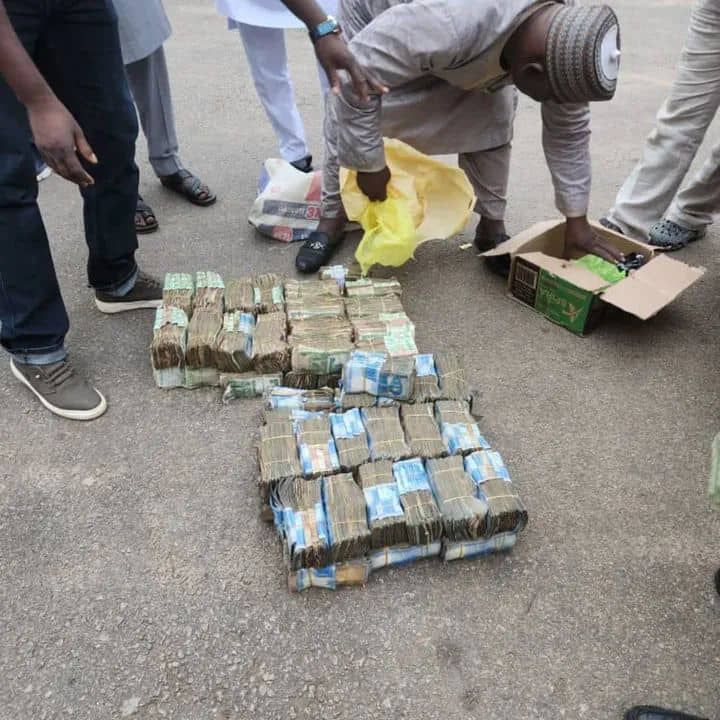
In a significant development ahead of today’s bye-elections, the Department of State Services (DSS) arrested Shehu Fatange, an agent of the People’s Democratic Party (PDP), on Friday night in Kaduna. Fatange was found with approximately ₦30 million in cash, which authorities allege was intended for vote-buying.
The arrest took place at a hotel in Kaduna metropolis, where Fatange was reportedly coordinating the distribution of funds to influence voters in the Chikun/Kajuru Federal Constituency election. Security sources confirm he was discovered with the money late Friday evening, raising concerns about attempts to undermine the electoral process.
The Kaduna State Police Command has taken custody of Fatange and confirmed an ongoing investigation. DSP Mansir Hassan, the police spokesperson, emphasized that security agencies are collaborating closely to ensure the elections proceed freely and fairly. He urged voters to remain calm and participate peacefully in today’s polls.
This incident occurs amid heightened tensions, with multiple parties accusing each other of planning vote-buying and violence to sway results in the Chikun/Kajuru, Zaria, and Sabon-Gari constituencies. While the DSS and police have not disclosed full operational details, they reaffirmed their commitment to investigating electoral malpractice and protecting the integrity of the vote.
Authorities continue to encourage citizens to exercise their right to vote without fear, assuring that measures are in place to safeguard the democratic process.
The Social Democratic Party (SDP) and the African Democratic Congress (ADC) in Kaduna State have separately distanced themselves from claims of a coalition ahead of the August 16 bye-elections, describing the purported alliance as false and misleading.
In a statement signed by the SDP State Chairman, Hon. Adamu Idris, the party dismissed a publication credited to one Hon. Nasiru Maikano, who allegedly announced a partnership between the two parties.
“The said Hon. Nasiru Maikano is neither the chairman nor a representative of the SDP in Kaduna State. He is not a registered member of the party, and no bonafide member of the SDP can be party to such an unholy statement capable of undermining our party’s prospects,” Idris said.
He stressed that the SDP remains independent in the forthcoming polls, fielding Comrade Johnathan Maikaratu Wushiri as its candidate for the Kajuru/Chikun Federal Constituency bye-election. The party also urged voters in Zaria Kewaye and Basawa State Assembly Constituency to disregard any statements from the alleged impostors.
Idris warned that the actions of those behind the coalition claims violate provisions of the SDP’s 2022 constitution (as amended) and would be reported to relevant party organs and security agencies. He called on members to remain law-abiding and comply strictly with Independent National Electoral Commission (INEC) regulations before, during, and after the elections.
Similarly, the ADC in Kaduna State also denied entering into any alliance with the SDP for the August 16 bye-elections in Kajuru/Chikun Federal Constituency, Zaria Kewaye, and Sabon Gari Constituencies.
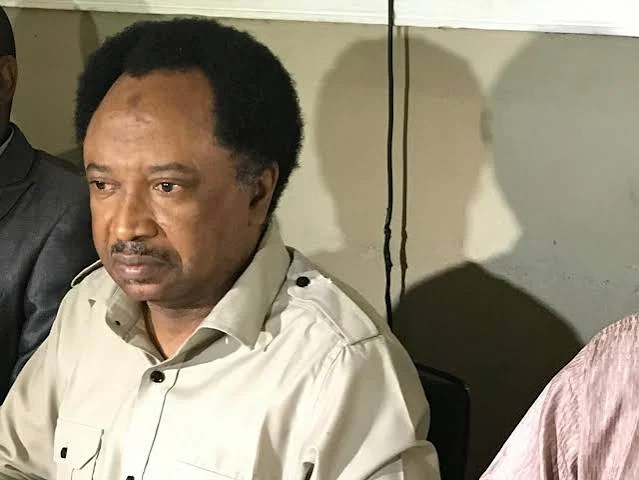
Former Senator representing Kaduna Central, Shehu Sani, has said that the root cause of Northern Nigeria’s persistent underdevelopment lies not with President Bola Ahmed Tinubu, but with past Northern leaders who failed to use their time in power to transform the region.
Speaking when members of the Tijjaniyya Grassroots Mobilization and Empowerment Initiative of Nigeria (TIGMEIN) paid him a courtesy visit at his Kaduna residence, Senator Sani said the North gained little during the eight-year administration of former President Muhammadu Buhari, despite widespread expectations.
“We had Buhari in power for eight years, but the North remained backward and impoverished. Industries like KTL, UNTL, Nortex, Arewa Textiles, and others were abandoned. Our leaders lacked vision and pursued development only for their families,” he said.
The former lawmaker lamented the dashed hopes of many northerners who believed that electing “one of their own” in 2015 would bring significant improvements. Instead, he said, the region continues to suffer from poverty, insecurity, unemployment, and decaying infrastructure.
According to Sani, it is both deceptive and unjust to blame President Tinubu, who has only been in office for two years, for problems that were long in the making.
“The North’s problems didn’t begin two years ago when Tinubu took over. They stem from selfish power struggles and missed opportunities. Former leaders had the chance to fix education, healthcare, and security, but they failed,” he said.
He accused some of the past Northern leaders of looting public resources, abandoning critical projects, and neglecting to represent the true interests of the region in national development efforts.
“Today, they want to deceive you that Tinubu is your problem. But ask yourself — did these bad hospitals, failed roads, insecurity, and poverty start just 24 months ago? These leaders were in power and failed to act. Some even stopped attending Arewa meetings,” Sani noted.
He also cited neglected infrastructure projects like the Kaduna–Abuja road, Minna–Abuja road, Lokoja–Abuja expressway, Ajaokuta Steel Company, and the Mambilla Power Project as clear indicators of leadership failure.
In a final message, Senator Sani urged the people of the North to resist propaganda aimed at recycling failed politicians, warning that returning them to power would yield no meaningful change.
“No matter how bad things may seem now, know this — your brothers from the North failed you. And if they return to power, nothing will change. The problem is not Tinubu — it is our selfish Northern leaders who had power and wasted it,” he concluded.
Sani, however, commended TIGMEIN for its grassroots empowerment drive, particularly its efforts to equip women and youths with skills for self-reliance and employment, describing it as a critical step towards reducing poverty and promoting peace in the region.
The immediate past Executive Secretary of the National Agricultural Lands Development Authority (NALDA), Prince Paul Ikonne, has raised serious concerns over the Alex Otti-led administration’s claim that it spent ₦54 billion on the retrofitting and construction of public schools across Abia State.
Speaking through his media assistant, Ujo Justice, PhD, while addressing stakeholders in Ukwa, Prince Ikonne described the government’s claim as “deeply suspicious, laughable, and insulting to the collective intelligence of Abians,” especially when compared to the current shameful condition of schools in the state. He questioned how any responsible government could boldly claim to have spent such an enormous sum—₦54 billion—on merely 53 schools, without corresponding evidence on the ground.
A state government report, signed by the Accountant General of Abia State, Njum Uma-Onyemenam, had revealed that the state generated N320 billion in 2024 from Federation Account Allocation Committee (FAAC) allocations, internally generated revenue (IGR), and other capital receipts, excluding local government earnings and borrowings.
Among the key expenditures listed in the report—published on the state government’s official website on January 28, 2025—are include rehabilitation of Public Schools – N54.07 billion
In a statement made available to newsmen on Sunday, Ikonne said: “What we see in Ukwa and several other parts of Abia is an education sector that is visibly in ruins. Ceilings are caving in, blackboards are barely usable, roofs are missing, walls are covered in moss, and some students still sit on bare floors under leaking roofs. If ₦54 billion was truly spent, then show us where. Which schools? What exactly was done? Let the government name them and take us there,” Ikonne queried.
The statement challenged challenged the government to immediately publish a breakdown of how the ₦54 billion was disbursed—identifying the contractors, locations, timelines, and photographic or video evidence of completed work.
According to him, anything short of this transparency amounts to a blatant disrespect for accountability and governance.
Prince Ikonne called on Governor Alex Otti to invite journalists, civil society organizations, and independent assessors to embark on an open and unscripted tour of the so-called renovated schools.
“Until then,” he warned, “this ₦54 billion remains a phantom project—something that only exists on budget documents and media headlines.”
He also pointed to the dilapidated condition of state-owned tertiary institutions such as the Abia State College of Health Sciences and Management Technology, where parts of the buildings have collapsed, leaving students in unsafe and non-conducive learning environments.
“If we can’t even maintain our own health college, how can we claim that we’re making progress in education? It is an utter disgrace and a sign of failed priorities,” he said.
Furthermore, Prince Ikonne reminded the public that under the current federal administration led by President Bola Ahmed Tinubu, states now enjoy increased federal allocations.
“The President, in his wisdom, has ensured that more resources flow to the states. One would have expected that the Abia State government would utilize this opportunity to transform critical sectors like education, health, and road infrastructure. Instead, what we are seeing is media packaging, propaganda, and empty political marketing.”
He emphasized that good governance is not about viral videos or curated press releases, but about results that citizens can see and benefit from.
“How on earth does anyone justify spending ₦54 billion on just 53 schools, with nothing visible to show? This must not be swept under the carpet. Abians must ask questions. Lawmakers must wake up. We need a comprehensive forensic audit of this expenditure. Our children deserve better,” Ikonne concluded.
He urged all well-meaning Abians, civil society groups, anti-corruption agencies, and legislative oversight bodies to rise in defense of accountability and demand answers from the state government.
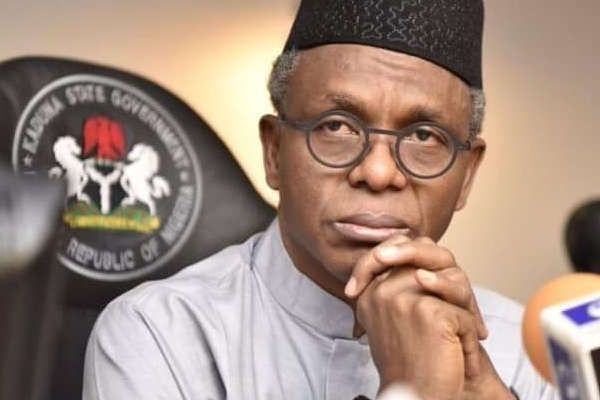
The Sokoto Democratic Youth Forum (SDYF) has come down hard on former Kaduna State Governor, Malam Nasir El-Rufai, over his recent comments seen as an attack on President Bola Ahmed Tinubu during a visit to Sokoto.
The Forum accused El-Rufai of fueling regional discord and reminded the public of his past controversial remarks about the late Sardauna of Sokoto, Sir Ahmadu Bello, as well as the arrest of respected Islamic cleric Sheikh Bello Yabo.
In a strongly worded statement issued to journalists on Saturday, the Forum expressed dismay at El-Rufai’s political maneuvers, accusing him of attempting to manipulate northern sentiments against the President. They described his campaign against Tinubu as selfish and rooted in personal grievances rather than any sincere commitment to national progress.
“We have not forgotten how El-Rufai insulted the late Sardauna of Sokoto, Sir Ahmadu Bello, nor have we forgotten how he ordered the arrest of respected Sokoto-based Islamic scholar, Sheikh Bello Yabo. His visit to Sokoto is a provocation we totally reject,” the Forum stated.
The youth group did not mince words in criticizing El-Rufai’s recent political moves, particularly his flirtation with the African Democratic Congress (ADC), which they described as a desperate and premature attempt to undermine Tinubu’s administration ahead of the 2027 general elections.
“There is no amount of insult or mobilisation that will discourage the average northerner from supporting President Tinubu. We have seen the bold steps he has taken to recover the economy, enhance security, and improve agricultural productivity across the country,” the statement read.
The Forum emphasized that Northern youths are now more politically aware and will not be manipulated by what they called El-Rufai’s “political theatrics.” They described his criticism of the current administration as hypocritical, pointing out that El-Rufai had failed to deliver real development in Kaduna State and was now projecting blame to cover his political frustrations.
“Just because he didn’t get a ministerial appointment, El-Rufai has chosen to fight President Tinubu under the guise of a false coalition. We want to categorically state that we are in full support of the South completing its constitutionally guaranteed two-term tenure of eight years.”
The statement concluded by reaffirming the group’s commitment to national unity and democratic stability, urging other northern youth groups across the 19 Northern states to reject divisive rhetoric and personal vendettas disguised as political activism.
“We will not allow El-Rufai or any politician to drag us back. The North is awake and united behind the values of peace, progress, and patriotism,” the Forum declared.
Growing dissatisfaction with the performance of Senator Lawal Adamu, popularly known as “LA,” reached a boiling point this week as the Kaduna Central Stakeholders Forum issued a scathing statement accusing the senator of betraying the trust of the people who elected him.
In a press release signed by the Forum’s Coordinator, Dr. Mustapha Ibrahim, the group lambasted Senator Adamu for what they called “a shallow, media-driven approach to governance” and criticized his perceived overreliance on social media to mask a lack of substantive legislative performance.
“Someone who can’t stand up in the Senate and speak on behalf of his people is pretending to be doing well by simply posting on Facebook,” the statement read. “This is an insult to the intelligence of the people who voted him into office.”
The stakeholders’ anger was triggered by a recent Facebook post in which Senator Adamu criticized President Bola Ahmed Tinubu’s administration for allegedly abandoning the Abuja-Kaduna Expressway, a key transportation and economic link between Northern and Southern Nigeria. In the post, Adamu wrote:
“Renewed agony. You abandoned the Abuja-Kaduna road—a very important road that connects the economic growth of the North and Southern Nigeria—yet you are spending over 700 billion naira on an existing airport.”
While the post attracted attention online, the Kaduna Central Stakeholders Forum insists that Senator Adamu’s activism on social media has not translated into any tangible benefits for the people of his district.
“Representation is not a Facebook popularity contest,” the Forum stated. “Our people need action, not empty online rhetoric. We need a senator who is active in plenary sessions, proposing motions, sponsoring bills, and pushing the executive to act—not one who hides behind a screen.”
According to the Forum, since assuming office, Senator Adamu has failed to sponsor any significant legislation or attract meaningful federal projects to Kaduna Central. The group also noted that insecurity, unemployment, and infrastructural decay remain widespread in the region, yet there has been “no visible effort” from the senator to address them at the national level.
They also questioned the sincerity of his criticism of the Tinubu administration, suggesting it was politically motivated rather than rooted in genuine concern for his constituents.
“The senator’s public outcry about the Abuja-Kaduna road may resonate with social media users, but without corresponding legislative action, it amounts to nothing more than noise,” Dr. Ibrahim added. “We challenge him to tell the people how many times he has raised this issue on the Senate floor.”
The Forum urged Senator Adamu to move beyond social media posturing and demonstrate true leadership through active engagement with federal ministries, effective lobbying for projects, and robust participation in Senate proceedings.
As political observers monitor the fallout, the message from Kaduna Central’s civic leaders is clear: symbolic politics will no longer be enough. With mounting insecurity, economic pressure, and social challenges in the district, stakeholders are demanding a new standard of representation—one rooted in results, not reactions.
Whether Senator Adamu will adjust his approach in response to the growing criticism remains to be seen.
The Northern Professionals and Academics Forum (NPAF) has expressed strong support for recent remarks made by Kaduna State Governor, Senator Uba Sani, and National Security Adviser, Malam Nuhu Ribadu, praising President Bola Ahmed Tinubu’s developmental strides in Northern Nigeria.
Speaking at the opening of a two-day interactive forum on government-citizen engagement organized by the Sir Ahmadu Bello Memorial Foundation (SABMF) at Arewa House in Kaduna, Governor Uba Sani did applaud President Tinubu’s unprecedented backing for state governments ,where he said,”No Nigerian President has supported governors like President Bola Ahmed Tinubu,” Governor Sani stated. “No governor will oppose him.”
While the National Security Adviser Malam Nuhu Ribadu highlighted significant improvements in the security architecture across Kaduna and neighboring states. He credited collaborative efforts between federal and state security task forces for the noticeable drop in incidents of banditry and kidnapping.
According to Ribadu, the enhanced security climate has restored confidence in road travel among government officials and citizens alike.
In a statement signed by its Head of Communications, Hajiya Fatima Bello, the NPAF lauded Governor Sani and NSA Ribadu for their “honest and factual” reflection of President Tinubu’s achievements.
The statement further read: “Those attacking them for speaking the truth are nothing but enemies of the North.
“We can see that our governors now have more resources to implement people-oriented projects and pay workers’ salaries on time.”
” It obvious that under Tinubu’s leadership, Northern Nigeria is experiencing sustained focus on critical areas such as infrastructure, healthcare, education, and security.
“Governor Uba Sani and Malam Ribadu have rightly highlighted these achievements, which align with our own assessments as professionals and scholars dedicated to the region’s progress.
NPAF commended President Tinubu’s “multi-dimensional approach” to development, describing it as a “blueprint for inclusive governance.
“We salute Governor Sani and Adviser Ribadu for spotlighting these successes, which are translating into real improvements in livelihoods and safety across the North.” it added.
However, the group cautioned that some individuals within the region continue to undermine the President’s efforts due to what it described as “unnecessary sentiments.”
The Northern Professionals and Academics Forum is a non-partisan network of over 1,500 experts, educators, and practitioners committed to driving socio-economic advancement in Northern Nigeria through research, policy advocacy, and community engagement.
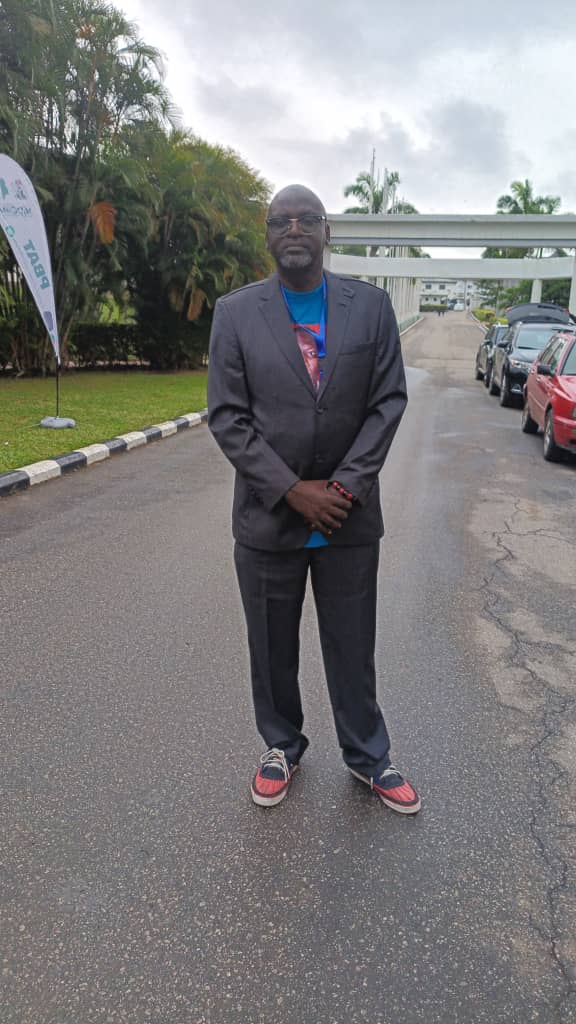
Twenty-nine years after enduring torture at Nigeria’s Presidential Villa for challenging military tyranny, US-based international human rights lawyer Emmanuel Ogebe returned to the scene of the crime —this time, to be honoured.
In 1996, during the dictatorship of General Sani Abacha, Emmanuel Ogebe, then a young lawyer, was disappeared for writing a letter concerning the assassination of Kudirat Abiola, wife of Chief Moshood Abiola, putative winner of the annulled 1993 presidential election.
For that act of defiance, Ogebe was abducted by state agents, detained without trial, and brutally tortured inside the Presidential Villa—an unusual venue for silencing dissent.
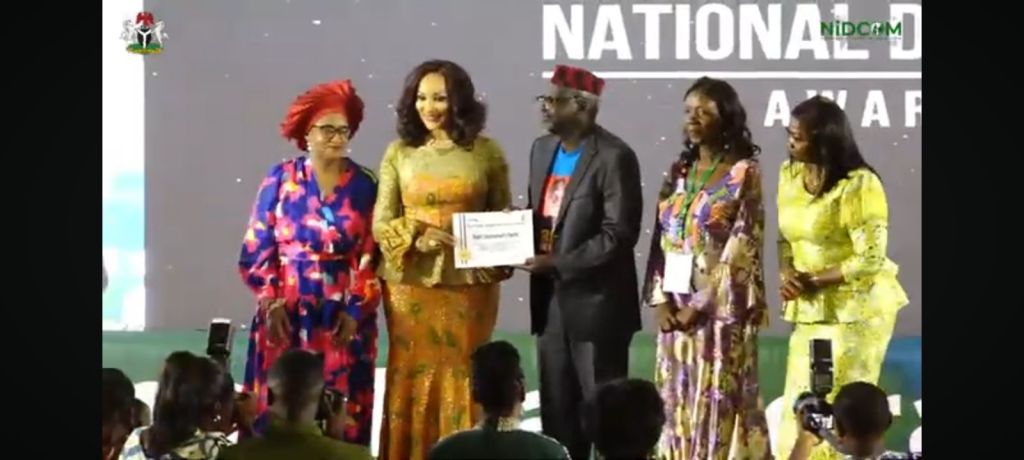
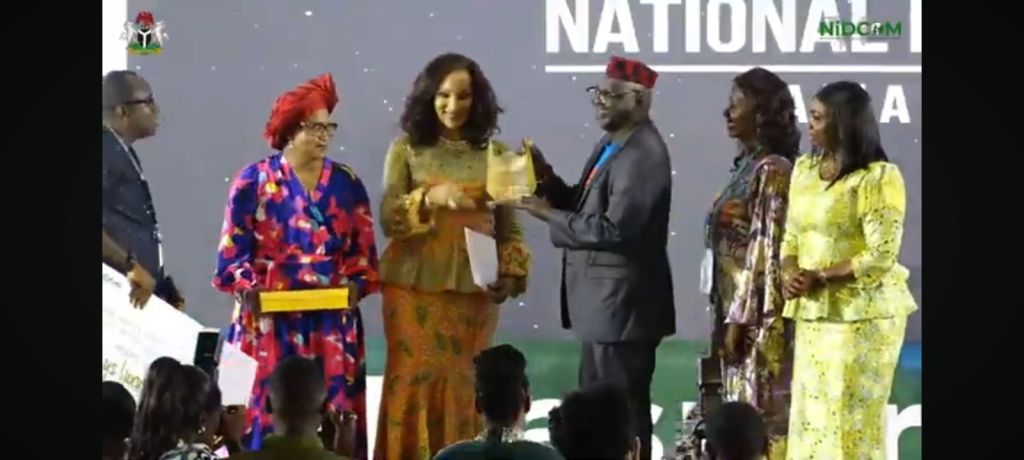
On July 26, 2025, nearly three decades later, Ogebe stood again on the same soil. But this time, he was not a prisoner. He returned as an honoured guest, receiving the National Diaspora Merit Award, Nigeria’s highest civilian honours for its citizens abroad.
The ceremony, held at the Presidential Villa and attended by diplomats, civil society leaders, and officials, was deeply symbolic—a testament to justice prevailing over repression.
Ambassador Bianca Onoh Ojukwu Nigeria’s Minister of State for Foreign Affairs, presented the award to Ogebe on behalf of the Federal Government.
Why Barrister Emmanuel Ogebe Was Honoured
According to Nigerians in Diaspora Commission, the agency that organised the award, Ogebe was recognised for his unwavering commitment to human rights, humanitarian service, and transformative impact in Nigeria and abroad.
Hero of the Year – DWAG
In 2015, the Darfur Women Action Group (DWAG) named him Hero of the Year during its International Human Rights Day celebration, in recognition of his global advocacy for oppressed people.
Ogebe and team conducted over 2,000 surgeries and medical interventions in the North and South of Nigeria, a rare bi-regional spread for international medical teams because of logistic challenges and insecurity, delivering critical aid to underserved communities, IDP camps, and victims of terror last year.
Obama-Era Recognition
His prior efforts earned him the President’s Bronze Volunteer Service Award under the Barack Obama administration for pro bono legal services to NGOs in Nigeria.
Transforming Lives Across Nigeria
Beyond health interventions, Ogebe’s initiatives have provided education, shelter, relocation and hope.
Ogebe Reflects on the Journey
“It was nostalgic for me to set my foot on the ground where 29 years ago I was a prisoner in this Presidential Villa, and today I am here to receive an award for my human rights work. It is only God who made it possible,” Ogebe said. “I have been to the Villa multiple times before and after my detention and torture but coming here specifically for a national honor was surreal.”
Reflecting on the timing of the award, he noted:
“Two things I want to say: the ghost of the most recent administration that persecuted me essentially ended when the head of that regime—Gen Muhammadu Buhari—was put in the ground last week. The timing could not have been more perfect.
The second thing that was intriguing is that one of the many vulnerable girls that I sponsored to school in America last week became an American citizen. So, a lot of things are just being divinely falling in place.”
Dedication to Prof. Fola Soremekun
Ogebe dedicated the award to his late father-in-law, Professor Fola Soremekun, a trailblazing scholar and Pan-Africanist who championed African history and anti-apartheid activism.
“He has gone to be with the Lord, but we hope to continue with his works,” Ogebe said.
From Nigeria’s Courtroom to Global Advocacy
Early Life and Legal Foundation
1990 – Graduated from the University of Jos as Nigeria’s youngest LL.B. holder.
1993 – Served as Legal Adviser to Aba Local Government during NYSC in Abia State.
1994 – Founded one of Abuja’s first human rights organisations, interacting with the UN and diplomatic entities
1996 – Arrested and detained by Abacha’s regime for demanding justice over Kudirat Abiola’s killing.
Exile and International Influence
1997 – Forced into exile in the U.S., where he testified before New York’s City Council. His advocacy led to the naming of Kudirat Abiola Corner outside Nigeria’s consulate.
1998 – Engaged with the U.S. Congress and contributed to major legislation on Sudan, AGOA, and religious freedom.
He became a voice on CNN, BBC, and international media platforms advocating for Nigeria’s oppressed.
Pioneering Legal Pathways and Development
2003 – Became the first Nigerian admitted to the Washington DC Bar as a Special Legal Consultant.
2004 – Appointed as Nigeria Country Representative for the U.S. African Development Foundation (USADF), coordinating U.S.–Nigeria projects in agriculture, MSMEs, flood recovery, and HIV/AIDS.
Humanitarian Work and Medical Aid
Over the years, Ogebe has overseen the donation of millions of dollars in medical equipment, consumables and medications to Nigeria, including a $400,000 shipment to Plateau State in 2024. His initiatives have built schools, homes, churches, and orphanages for survivors of terror.
He also facilitated grants for orphans and widows, working with faith-based U.S. organisations—including one funded by Hollywood actor Denzel Washington.
Advocacy for Terror Victims and Chibok Girls
Ogebe played a pivotal role in bringing international attention to the Chibok girls. In 2014, he arranged the largest U.S. airlift of Chibok escapees to access education abroad.
His work inspired the Broadway play “Eclipsed” by Hollywood star Danai Gurira, starring Lupita Nyong’o to dedicate its performance to each Chibok girl by name including Bono’s (U2) public support for the Chibok girls.
A brief scene in the Disney mega block buster Black Panther also memorialized the Chibok girls’ saga thanks to Ogebe.
Landmark Legal Victory in Indonesia
In 2023, after over 15 years of pro bono work that secured a historic ruling from the Indonesian Supreme Court, overturning the death sentence of a trafficked Nigerian, Ogebe repatriated him back to his family on Christmas Eve —the first such post-verdict reprieve ever achieved for a Nigerian in Indonesia.
Policy Reforms and Global Recognition
Ogebe was instrumental in:
Influencing President Jonathan’s establishment of the Victim Support Fund for terror survivors.
Obtaining the designation of Boko Haram as a Foreign Terrorist Organization by the U.S. in 2013.
Prompting ICC investigations into crimes against humanity by Boko Haram in 2013 and 2020.
His advocacy has spanned the United Nations, World Bank, Geneva Summit, and national parliaments from Canada to the UK.
A Life Committed to Justice
Today, Emmanuel Ogebe continues to serve as Special Counsel for the Justice for Jos Project, offering legal aid, advocacy, and humanitarian support—entirely pro bono.
His numerous honours include:
The President Obama Bronze Volunteer Award
Hero of the Year Award by DWAG
Recognitions from Nigerian diaspora groups and U.S. state governments in Florida, Arkansas, and New Jersey
From suffering in the dungeons of a repressive regime to being honoured by the same nation, Emmanuel Ogebe’s life is a testament to courage, redemption, and the enduring power of justice.
The Youth Reformation and Leadership Skills Development Foundation recently conducted independent enquiries regarding allegations levelled against the Chief of Army Staff, Lieutenant General Olufemi Oluyede, specifically focusing on personnel pay, allowances, and promotions. Our investigations aimed to provide a comprehensive overview of the current state of the Nigerian Army and the initiatives undertaken to enhance the welfare of its troops.
Commitment to Personnel Development
Lieutenant General Olufemi Oluyede has consistently demonstrated a robust commitment to uplifting the Nigerian Army through comprehensive training and retraining programs. These initiatives ensure that soldiers are adequately equipped to perform their duties and are prepared to meet future challenges. The focus on continuous professional development is essential for maintaining operational readiness and enhancing the overall effectiveness of the Army.
Structured Promotion Procedures
Promotions within the Nigerian Army are strictly governed by well-defined guidelines that prioritize merit, performance, and available vacancies, as detailed in the Armed Forces of Nigeria Harmonized Terms and Conditions of Service (HTACOS) Soldiers/Ratings/Airmen 2024. The Chief of Army Staff has steadfastly upheld these standards, ensuring that promotions are awarded based on hard work, efficiency, and compliance with established criteria.
Improved Pay and Allowances
During General Oluyede’s leadership, significant strides have been made in ensuring the prompt payment of salaries and addressing any outstanding arrears. The recent increase in Duty Tour Allowance (DTA) exemplifies the Army’s commitment to adequately compensating its personnel for their dedicated service. This measure not only boosts morale but also reflects an understanding of the financial challenges that soldiers and their families face.
Enhanced Living Conditions
The Chief of Army Staff has prioritized the construction and renovation of soldiers’ accommodations, hospitals, schools, and recreational areas. Such improvements are vital for fostering a supportive environment that promotes the health and well-being of service members and their families. By investing in essential facilities and amenities, General Oluyede aims to enhance the quality of life for troops.
Findings from Our Independent Assessment
Our independent fact-finding mission allowed us to engage in discussions with personnel across various military formations. The feedback received during these interactions provided valuable insight into the current state of the Nigerian Army.
Commendations and Appreciation
The findings reveal widespread commendation and appreciation for the initiatives implemented by the Chief of Army Staff, Lieutenant General Olufemi Oluyede. Personnel expressed satisfaction with his leadership style and acknowledged the tangible improvements in their working conditions and quality of life. Many voiced their loyalty and commitment to the Army and the nation while also expressing hopes for ongoing enhancements to their well-being.
Conclusion
In conclusion, the Nigerian Army, under the leadership of Lieutenant General Olufemi Oluyede, remains dedicated to the welfare of its personnel. The ongoing initiatives in training, promotion, pay adjustments, and facility improvements reflect a genuine commitment to excellence. The Army values the support and dedication of its personnel, and together, we will continue to pursue a more effective and prosperous service for the benefit of the nation.
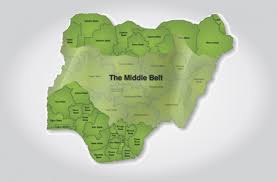
The Middle Belt Forum (MBF) has come out in full force to reject what it calls a dangerous and unjust clause in the National Council for Traditional Rulers of Nigeria (Establishment) Bill, 2024. The Forum described the proposal to make the Sultan of Sokoto a permanent co-chair of the national body as historically fraudulent, culturally insensitive, and a threat to Nigeria’s secular democracy.
The bill, which has already passed second reading in the Senate, is being sponsored by Plateau South Senator Simon Bako Lalong—himself a traditional titleholder of the Gwad-Goemai. Ironically, he hails from the same region whose heritage the bill seeks to undermine.
In a statement signed on July 27, 2025, by Luka Binniyat, the MBF’s National Publicity Secretary, the Forum strongly condemned the clause that seeks to entrench both the Sultan of Sokoto and the Ooni of Ife as permanent co-chairmen of the proposed Council.
While the group refrained from challenging the Ooni’s inclusion, it roundly rejected the automatic and perpetual elevation of the Sultan of Sokoto, calling it a gross distortion of Nigeria’s traditional power structure.
History Cannot Be Rewritten
The MBF argued that the Sultanate of Sokoto is a much younger institution compared to the age-old monarchies of the Middle Belt. They pointed to the Kwararafa Confederacy—a vast multi-ethnic empire dating as far back as the 800s AD—as proof of a more ancient and inclusive traditional system. The Aku Uka of Wukari, who embodies this legacy today, is regarded as the living symbol of that rich cultural tradition.
Similarly, the Attah of Igala was cited as a traditional monarch whose kingdom predates the Sokoto Caliphate and was never subjected to its rule. The Forum emphasized that the Igala people maintained their cultural autonomy and resisted Islamic conquest.
The Tor Tiv, spiritual leader of the Tiv nation, was also mentioned as a symbol of a fiercely independent people who operated a decentralized political system long before the arrival of the Fulani jihadists. Forcing such a leader to serve permanently under the Sultan, the MBF said, would amount to rewriting history and insulting the people’s identity.
The Nupe Kingdom, with roots stretching back to the 15th century, was also listed as another Middle Belt monarchy older than the Caliphate. The Etsu Nupe, the Forum said, represents an authentic indigenous structure that cannot be made subordinate to a newer institution.
Religious Bias in a Secular State
Beyond historical grievances, the Forum raised serious concerns about religious bias. It warned that assigning a permanent chairmanship to the Sultan—a religious figurehead for Muslims across the North and FCT—would inject religion into what should be a neutral and inclusive institution. The MBF accused lawmakers of attempting to Islamize a secular national council under the guise of tradition.
The Forum pointed out that even the Shehu of Borno, whose Kanem-Borno Empire adopted Islam centuries before the Sokoto Jihad, has a stronger claim to religious leadership than the Sultan—yet he was not named as a permanent co-chair.
—
Sultan’s Association with MACBAN Raises Red Flags
The MBF further argued that the Sultan’s well-known role as Grand Patron of the Miyetti Allah Cattle Breeders Association of Nigeria (MACBAN) makes his permanent elevation especially troubling. The association has been repeatedly linked to violent attacks by armed Fulani herders across the Middle Belt. According to the Forum, the Sultan has failed to condemn or distance himself from the group’s violent activities, and his silence has caused deep pain among communities devastated by these attacks.
“Making him the face of Nigerian traditional leadership is like rubbing salt in the wounds of our people,” the MBF said.
A History of Resistance, Not Submission
The Forum reminded Nigerians that the Middle Belt has a proud legacy of resisting Usman Dan Fodio’s 19th-century jihadist expansion. Many of its communities were only brought under Fulani emirate rule through the coercive policies of British colonial indirect rule—a system that imposed foreign rulers on indigenous peoples for administrative convenience.
Now, over 60 years after independence, the Forum insists that history must not repeat itself in the form of legislative dominance or cultural erasure.
Threat of Boycott and Alternative Plans
Should the bill pass with the controversial clause intact, the Middle Belt Forum said traditional rulers from the region would reject and boycott the Council entirely. It announced that preparations are underway to form a Council of Middle Belt Traditional Rulers—a separate body that would recognize the unique cultural heritage and autonomous histories of its member communities.
As a way forward, the MBF proposed the following alternatives:
The chairmanship of the national Council should rotate among Nigeria’s six geo-political zones
Leadership should be tenure-based, not permanent
Traditional rulers should elect their leaders through a democratic and inclusive process
Final Word: Unity Through Justice
The Middle Belt Forum concluded that true unity can only be built on equality, fairness, and mutual respect. Imposing a single religious figure as permanent co-chair over a culturally diverse nation, it warned, is a dangerous path that undermines federalism and national cohesion.
The MBF vowed to use every peaceful and democratic means to resist what it sees as a brazen attempt to recolonize the Middle Belt under a religious banner, and called on all fair-minded Nigerians to reject the bill in its current form







 Middle-Belt Times