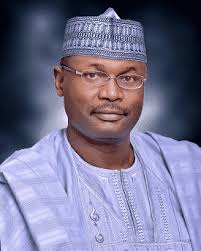
Dr. Ladan Salihu’s recent remarks on the performance of the Independent National Electoral Commission (INEC) under the leadership of Professor Mahmood Yakubu are marked by a tone of sweeping disapproval and generalization that does little justice to the complexities and hard-earned gains of Nigeria’s evolving democratic process. While criticism is an essential feature of democratic discourse, it must be grounded in a balanced appraisal of facts and realities, not driven by pessimism or selective memory.
Dr. Salihu’s claim that “INEC has not lived up to the expectations of Nigerians” and that “nothing has changed” since previous elections fails to acknowledge the significant, data-backed, and courageous reforms that have transformed the electoral landscape under Professor Yakubu’s stewardship. While elections in Nigeria remain a work in progress—as they are in every democracy—the assertion that INEC has “missed out on history” is not only inaccurate but dismissive of the monumental steps taken to safeguard electoral integrity.
A Groundbreaking Technological Shift
One of the most revolutionary achievements under Professor Yakubu has been the deployment of the Bimodal Voter Accreditation System (BVAS) and the INEC Result Viewing Portal (IReV). These innovations mark a decisive break from Nigeria’s history of ballot stuffing, multiple voting, and result manipulation.
BVAS eliminated the long-standing issue of ghost and multiple voting by introducing biometric accreditation, ensuring that only eligible and present voters could cast their votes.
IReV, for the first time in Nigeria’s electoral history, enabled near real-time public access to polling unit results, introducing a level of transparency previously unimaginable.
While these technologies experienced challenges—particularly during the 2023 presidential election—such hiccups are not evidence of failure but rather indicators of the ambition and scale of these reforms. The logical path forward is to strengthen and refine these systems, not to discard them.
Institutional Independence and Courage
Under Professor Yakubu, INEC has demonstrated an unusual level of operational independence and courage in the face of overwhelming pressures from political actors, entrenched interests, and threats of violence. The Commission has postponed or suspended elections where the process was compromised, and pursued legal action against electoral offenders—often in a judicial system that itself remains slow and cumbersome.
This insistence on upholding due process, often at great personal and institutional cost, should be seen as a positive departure from the opaque and manipulated electoral systems of the past.
Logistical Feats in a Complex Landscape
Nigeria is one of the most complex electoral environments in the world, with over 93 million registered voters and more than 176,000 polling units across difficult terrains, remote areas, and volatile regions. Organizing credible elections on this scale requires a herculean logistical effort.
Under Professor Yakubu’s leadership, INEC has:
Improved early distribution of sensitive materials.
Enhanced the training and deployment of over a million ad-hoc staff, including NYSC members.
Reduced delays and disorder in many parts of the country during election days.
To overlook these significant operational successes while highlighting isolated incidents of failure is a distortion that does injustice to the thousands of Nigerians who worked tirelessly to deliver credible elections.
Addressing the Trust Deficit
The oft-cited “trust deficit” is not unique to INEC under Professor Yakubu—it is a historical issue stemming from decades of electoral malpractice. However, trust is not rebuilt overnight; it requires time, transparency, consistency, and institutional reform. The introduction of BVAS and IReV are not just cosmetic changes—they are foundational tools in the long road toward restoring public confidence in elections.
Conclusion: Progress, Not Perfection
Democracy is not a destination but a journey. No electoral process anywhere in the world is perfect, but progress must be recognized and built upon. Professor Mahmood Yakubu’s tenure has not been flawless, but to claim “nothing has changed” is to ignore the transformative steps taken under his watch.
Instead of hasty condemnation, what Nigeria’s electoral process needs now is critical support, constructive engagement, and continued innovation. Professor Yakubu has laid a foundation upon which a more transparent, credible, and inclusive democracy can be built. The responsibility now lies with all stakeholders—government, civil society, the judiciary, political actors, and the electorate—to protect, improve, and institutionalize these gains.
Dismissing his efforts wholesale only serves to discourage reformers and embolden those who prefer the shadows of the past. Let us not squander the progress we have made, but rather, consolidate and expand it for the sake of future generations.
Abubakar Billy Tafawa Balewa
Bauchi, Nigeria.

 Middle-Belt Times